
We had our 2023 Bronco Sport treated with the Borophene ceramic coating and it makes the car look brand new! We are fortunate to leave by the ocean, but that comes with the challenge of salt spray putting a film on the car. Looking forward to much easier maintenance and the car continuing to look great! Kelson did a super job and Steven was very helpful in providing information about the options and getting us scheduled.
Home › Vog, Salt & UV Protection
Three things are eating your paint. At the same time.
Acid falling out of the sky, salt that keeps corroding after it dries, and the highest UV load in the country. Mainland paint deals with one of these. Big Island paint deals with all three, every day, year round.
13 years on this island
Kona shop or mobile
Fully insured
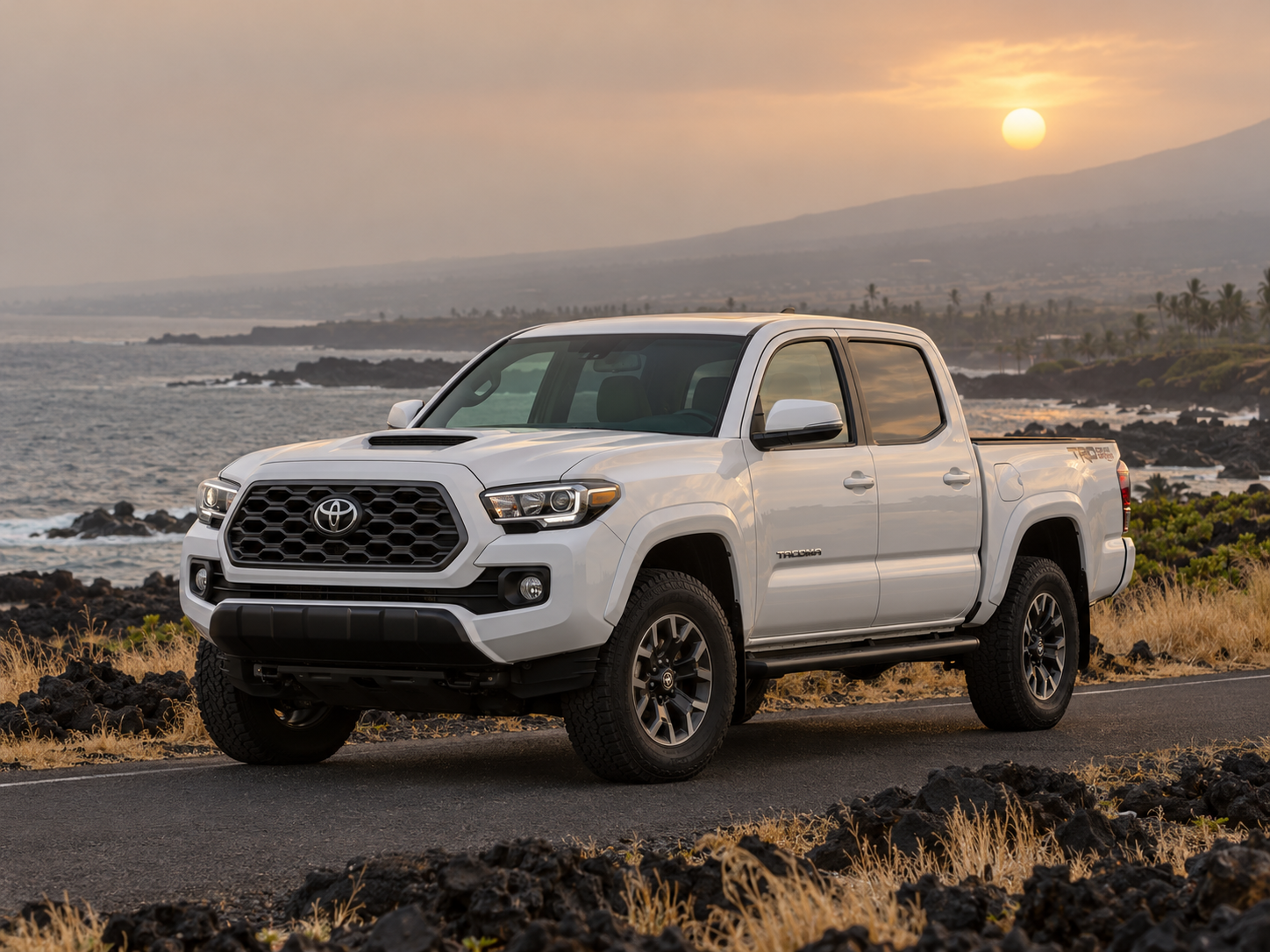
Why island paint fails faster
What you are actually up against
None of this is marketing. Every claim below comes from the U.S. Geological Survey or the EPA, and you can check all of it in about two minutes.
Vog
Dilute battery acid, falling on your paint
The USGS describes vog as primarily sulfuric acid, and says its droplets have “the corrosive properties of dilute battery acid.” Kona sits on the wrong side for it — trade winds blow 80–95% of the time from May to September and carry it around the south point and straight up this coast, where the sea breezes hold it in place. It etches clear coat and glass.
Salt
It does not stop working when it dries
Marine salt is hygroscopic — it pulls moisture back out of the air every humid night, so a dried salt crystal on a panel is still an active corrosion cell days after you parked. That is why island cars rust in places mainland cars never do, and why rinsing matters more here than anywhere.
UV
The highest UV load in the country
Hawaiʻi runs a UV index around 7 in winter and 11+ in summer — extreme on the EPA scale, and the highest sustained load of any U.S. state. Not because the sun is closer, but because at 19°N it is nearly overhead, so its rays cross far less atmosphere than they do on the mainland. It breaks down clear coat, trim and interiors faster here. Full stop.
Sources: U.S. Geological Survey, Hawaiian Volcano Observatory — Frequently Asked Questions About Volcanic Smog (vog). EPA UV Index scale. We cite them because you should be able to check us.
What it looks like on a real car
Before you can fix it, you have to recognise it
Three different kinds of damage that people routinely mistake for each other. They need different fixes, and two of the three stop being fixable if you wait.
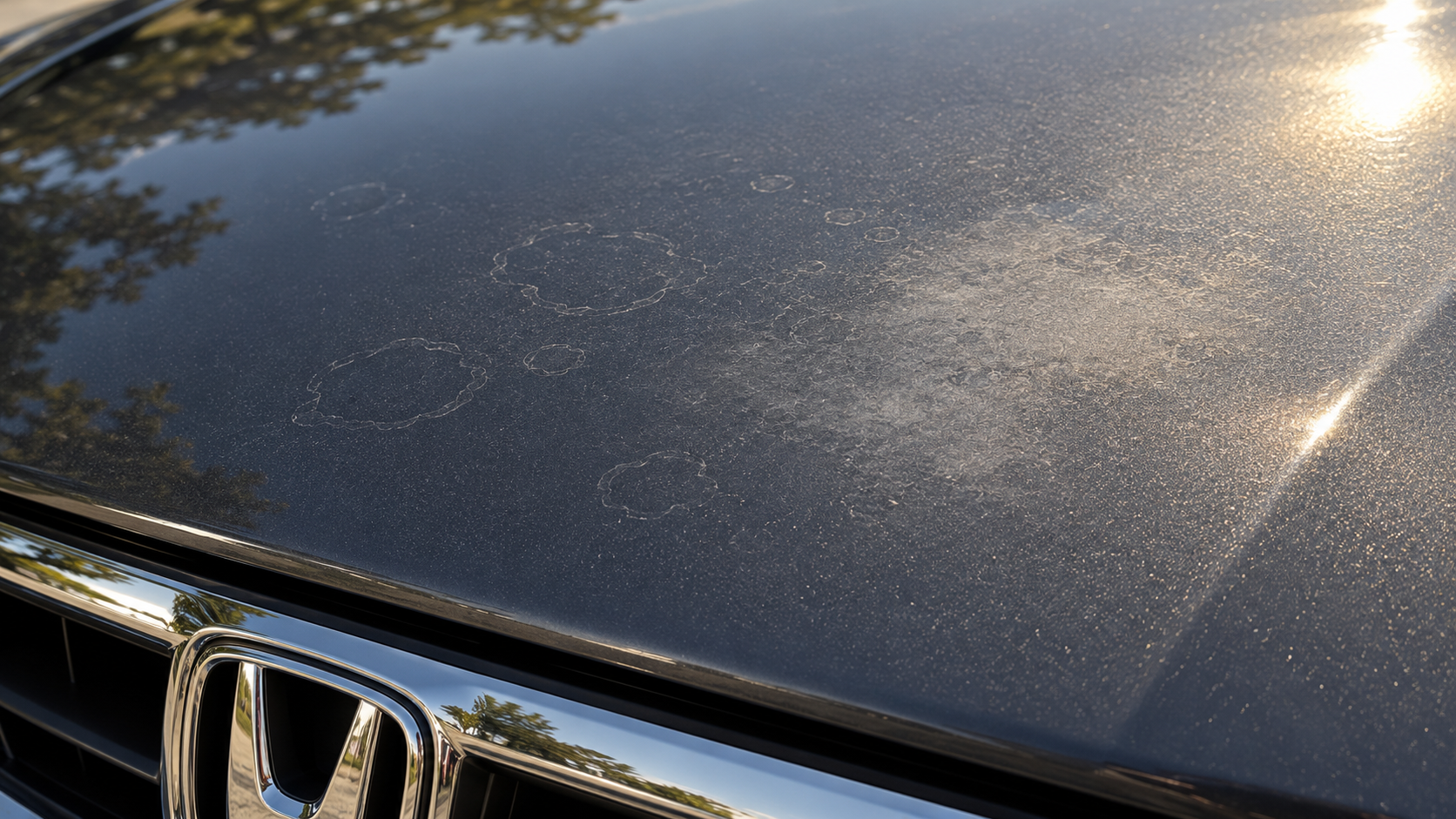
Vog etching — rings and haze in the clear coat
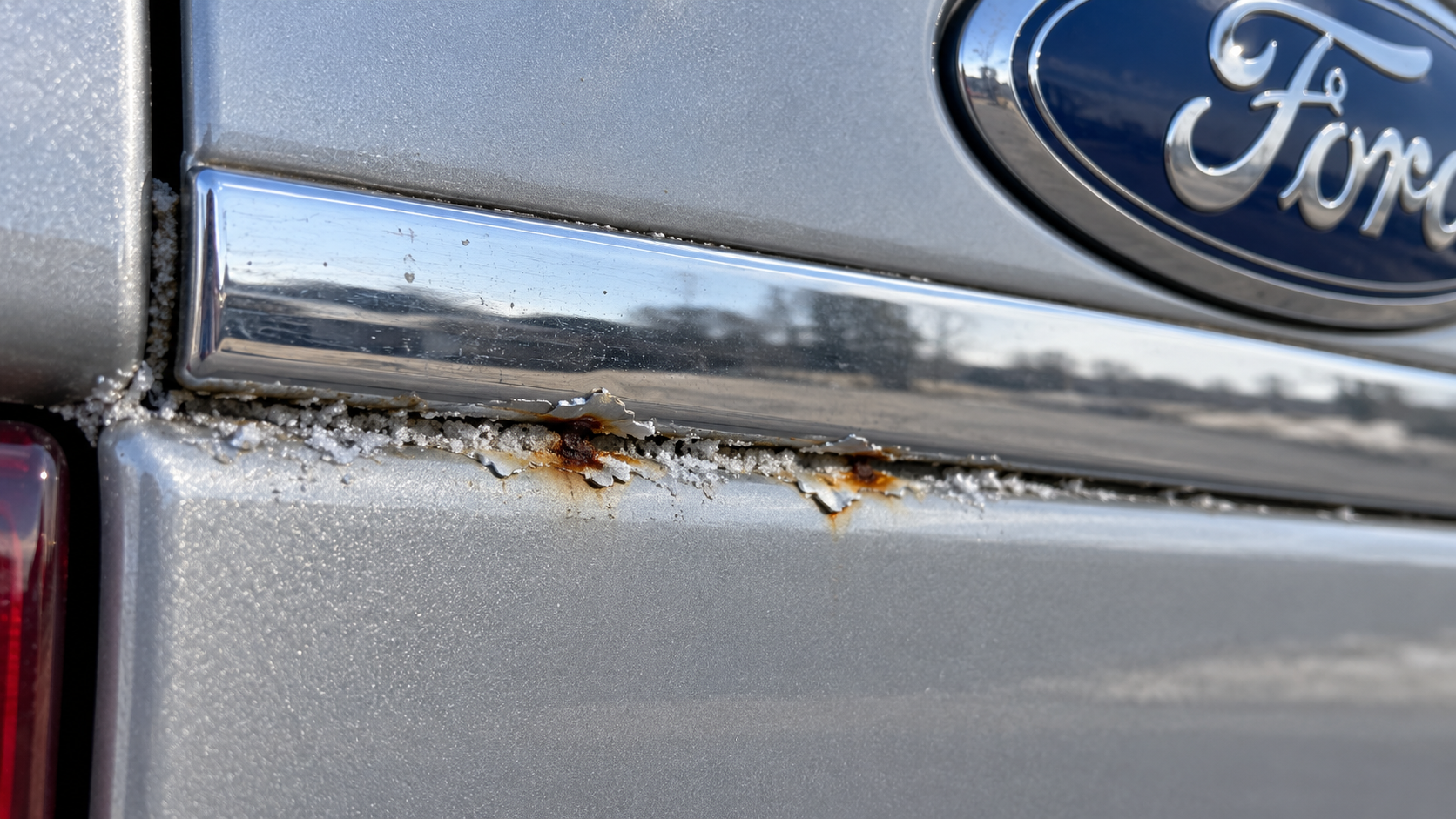
Salt corrosion — starts at seams and trim edges
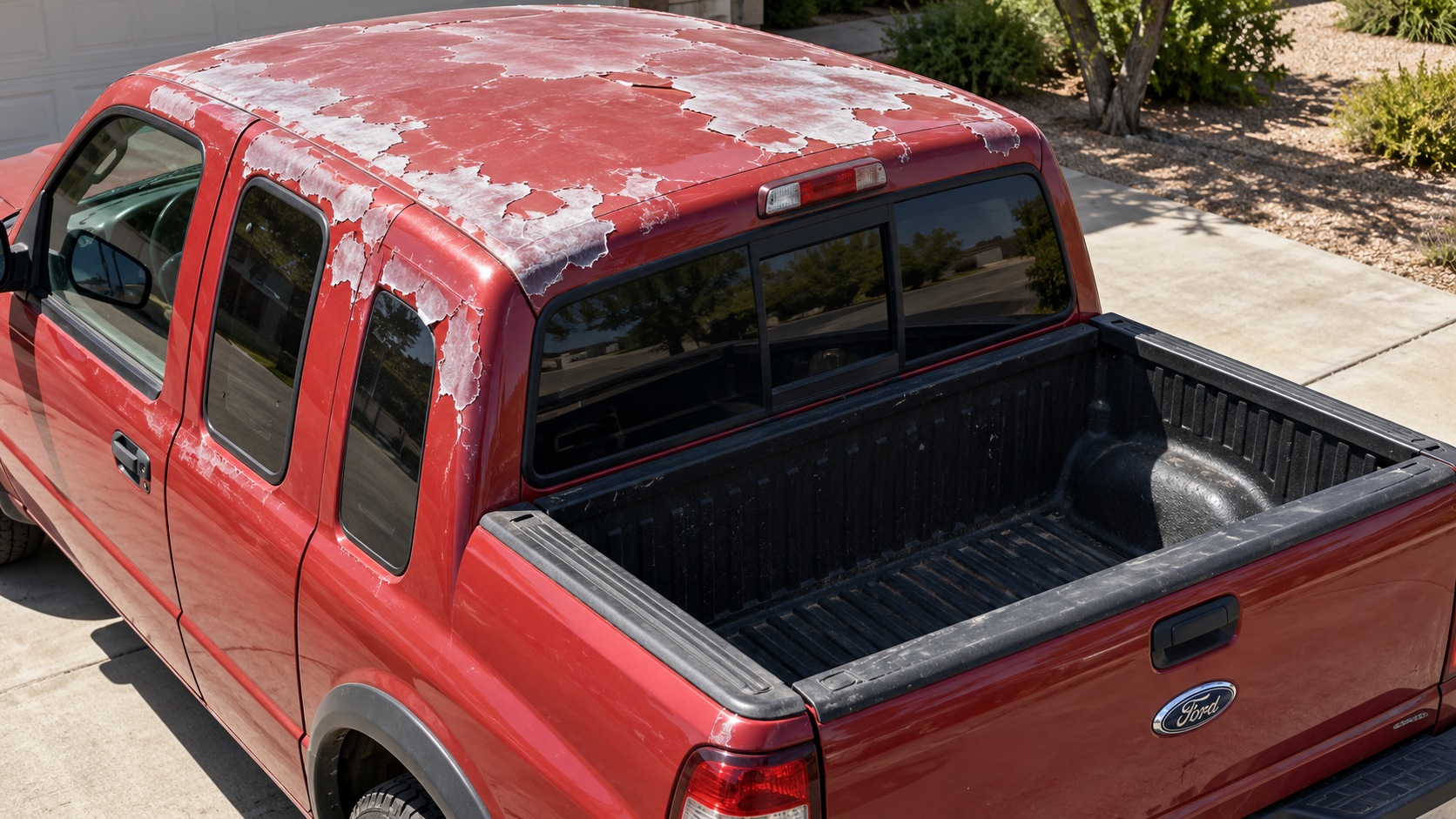
UV failure — past polishing, needs paint
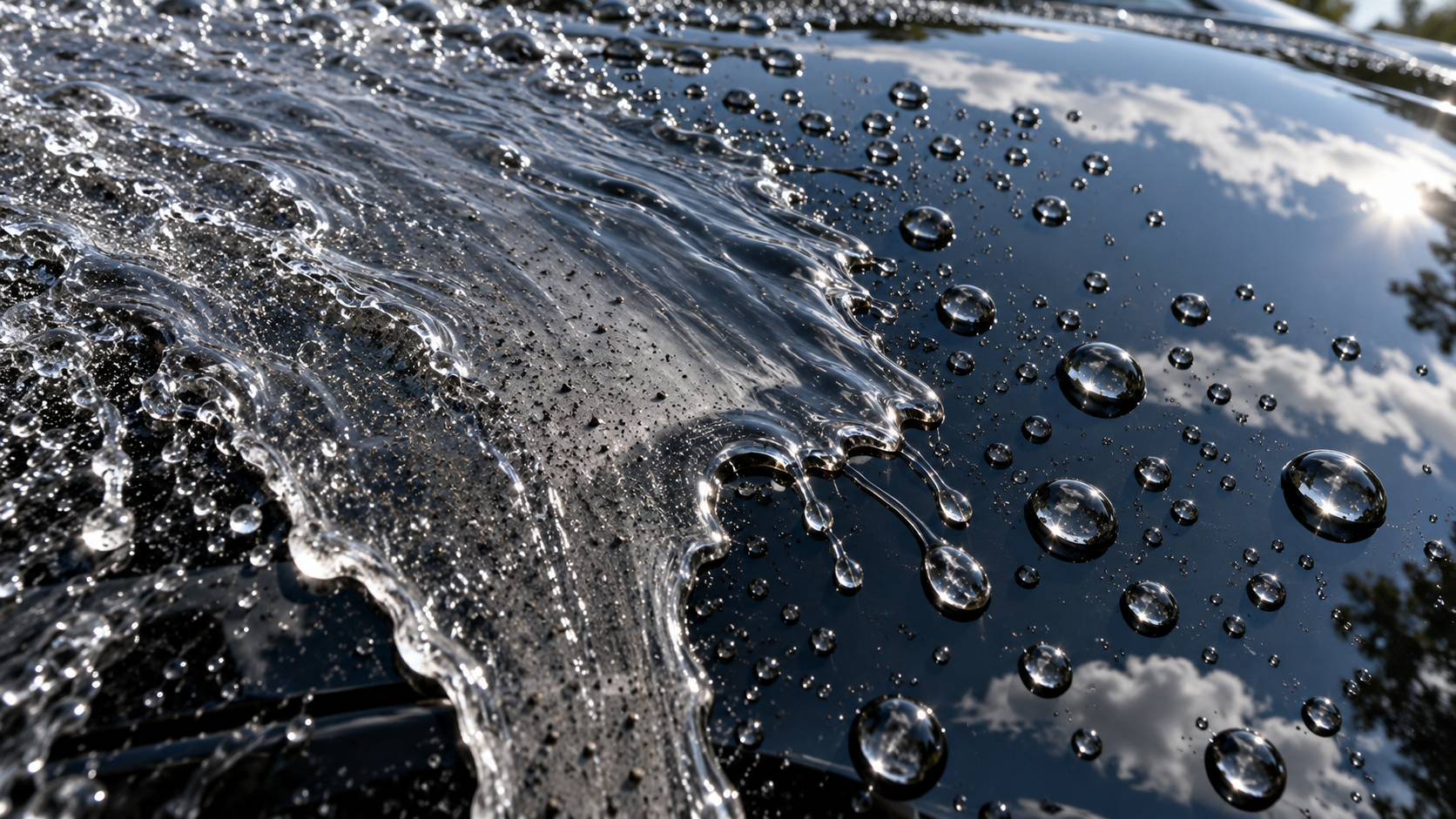
Coated — fallout rinses off before it can bite
In order of how much it actually helps
What to do about it
You cannot change the air on this island. You can change what that air lands on — and how long it gets to sit there.
- 1. Put a barrier between the island and your paint. A coating is sacrificial: the acid, salt and UV attack it instead of your clear coat, and nothing bonds well to it, so what lands rinses off. Stealth Diamond Borograph is the one we put on our own vehicles.
- 2. Rinse more often than you think you need to. The enemy is dwell time. Fallout that leaves before the next dew cycle never gets the chance to concentrate and etch.
- 3. Fix what is already there before you seal it. A coating locks in whatever is underneath. Light etching and oxidation polish out; deep etching does not. We tell you which is which before we start.
- 4. Do not forget the interior. Paint can sometimes be polished back. A cracked dash and a faded seat cannot — replacement is the only fix. Interior ceramic blocks the UV that causes it.
- 5. Keep it on a schedule. Coated paint still needs washing — the coating makes the washing work, it does not replace it.
Where we work
- West & North Hawaiʻi — everything. Kailua-Kona, Holualoa, Keauhou, Captain Cook, Kealakekua, Waikoloa, Waimea, Hawi and the Kohala Coast. Mobile at your home or office, or drop-off at our Kona shop near Magic Sands Beach Park.
- East side — coatings only, mobile only. Hilo, Keaau, Pahoa, Volcano and the Puna district get Stealth Diamond Borograph and Liquid PPF packages. Detailing and paint correction stay West and North side.
- Travel fee: $50$52 card past 20 miles outside the Kona district. No fee if you drop off at the shop. We give you the exact address when you book.
Island Special · Big Island pricing
What protection costs
Prices shown are cash prices. Pay by cash or check and that is what you pay. The card price is shown in grey beside every figure — slightly higher, because card processing costs us that. Nothing is added at checkout either way: both prices are on the page before you book.
Hawaii GET is added at invoice and shown as its own line, at the state maximum visible pass-on of 4.712% (4% state + 0.5% Hawaiʻi County surcharge). Prices on this page do not include it.
Wash, decontamination, and tar and sap removal are included in every coating price. Prep beyond that — correcting damage already in the paint — is quoted after inspection, before any work starts.
Stealth Diamond Borograph Ceramic
Small — sedans & coupes
$1,000$1,035 cardRegular $1,850
Medium — crossovers, pickups, small SUVs
$1,250$1,295 cardRegular $2,300
Large — full-size trucks, vans, large SUVs
$1,500$1,555 cardRegular $2,800
Tour & commercial vansQuoted on inspection
from $2,500$2,590 card
Liquid PPF + Stealth Diamond Borograph
Small — sedans & coupes
$3,000$3,105 cardRegular $5,500
Medium — crossovers, pickups, small SUVs
$4,000$4,140 cardRegular $7,350
Large — full-size trucks, vans, large SUVs
$5,000$5,175 cardRegular $9,150
Tour & commercial vansQuoted on inspection
from $7,500$7,765 card
Adds rock chip and road debris resistance on top of the coating.
Lighter protection
Ceramic Infused Super ProtectionSix to twelve months, applied over a detail
$100$104 card
Interior CeramicWith any exterior package — blocks the UV that cracks dashes
from $219$227 card
Maintenance ProgramOne coating-safe wash a month, plus inspection
from $225 / mo$233 / mo card
Travel fee $50$52 card past 20 miles outside the Kona district. Gas on this island runs well above the mainland and the run to Waimea, Hawi or Hilo is real time in the truck — that fee goes straight to the technician working your job, not onto the service price. No fee if you drop off at our Kona shop near Magic Sands Beach Park — we give you the exact address when you book. We tell you the travel fee when you book, never when we arrive.
Kona shop or mobile
13 years on the Big Island
5,000+ vehicles
Fully insured
Trained & certified techs
100% satisfaction guaranteed
In our customers’ words
Five stars, every one
Google Reviews
Shown word for word
ZIPPY KLEAN Technician Steve was absolutely a Professional. He answered all of our questions before we knew to ask it. We got the Worx package for OUR 2025 Ford Bronco and are extremely satisfied. Stay tuned for the 6 weeks report, the time it takes for the clear coat to cure. We would HIGHLY RECOMMEND ZIPPY KLEAN TO HELP MAINTAIN YOUR CAR IN PRISTINE CONDITION. MAHALO STEVE FOR YOUR PROFFESIONAL AND ALOHA ATTITUDE.
Great service and quality work!! Owner Steven is very nice and takes the time to work with you. I definitely recommend this company!! Give them a try!!
No obligation
Find out what your paint actually needs
Send a few photos in daylight — the hood and roof tell us most of it — and we will come back with a firm number and an honest read on what is correctable.
Prefer to talk? (808) 201-6005 — call or text. Open 7 days · 6am–6pm.
Straight answers
Vog, salt and sun questions
Does vog actually damage car paint?
Yes. The USGS describes vog as primarily sulfuric acid and other sulfate compounds, and says its droplets have “the corrosive properties of dilute battery acid” — on a car that means acid etching in the clear coat and permanent spotting on glass and brightwork.
The mechanism is straightforward. Sulfur dioxide from Kīlauea converts to sulfate aerosol in the atmosphere. Those droplets settle on horizontal panels — hood, roof, trunk lid, the tops of mirrors. Dew and overnight humidity re-wet them, concentration climbs as the water evaporates in the morning sun, and the acid bites.
The damage looks like faint rings or a dull haze that will not wash off. Caught early it polishes out. Left through enough cycles it goes through the clear coat and the only fix is paint.
Why is Kona hit harder by vog than Hilo?
Kona is downwind. The USGS states that trade winds blow 80–95% of the time from May through September and carry vog around the south point of the island and up the Kona coast, where daytime onshore and nighttime offshore breezes trap it against the shore.
That is why West Hawaiʻi can sit under haze for days while the east side is clear. It reverses in winter when the trades drop and Kōna (southerly) conditions push vog toward Hilo and Puna instead.
Most vog stays below the trade wind inversion at 6,000–8,000 feet, which is exactly where everybody lives and parks.
Why does salt damage my car when I never drive on the beach?
Because marine salt is hygroscopic — it pulls moisture back out of humid air, so a dried salt crystal sitting on a panel is still an active corrosion cell days after it landed there.
This is the part people get wrong. Salt does not need standing water or a beach drive. On an island, marine aerosol is in the air you park in. It settles, it dries, and then every humid night it re-wets itself and keeps working.
That is why island cars corrode in places mainland cars never do — seams, tailgate seals, under trim, around badges, the backs of wheels. A coating gives the salt a surface it cannot bond to, and a rinse actually carries it away instead of smearing it around.
Is the sun really worse in Hawaii, or is that just something people say?
It is measurably worse. Hawaiʻi runs a UV index of about 7 in winter and 11 or higher in summer — “extreme” on the EPA scale, and the highest sustained UV load of any U.S. state.
The reason is sun angle, not distance. At 19°N the sun is nearly overhead at midday, so its rays pass through far less atmosphere than they do over the mainland and arrive with much less of the UV filtered out. The Earth is no closer to the sun in Hawaiʻi than it is in Ohio — that distance changes with the season, not with latitude, and it is actually smallest in January for everyone on the planet.
What it does to a car: clear coat breaks down and goes chalky, trim fades and turns grey, dashboards crack, seats lose colour. Paint can sometimes be polished back. An interior cannot.
Will a ceramic coating stop vog etching?
A coating is a sacrificial barrier, not a force field — it takes the acid attack instead of your clear coat, and because nothing bonds to it well, what does land rinses off before it can concentrate and bite.
That is the honest version. Anyone telling you a coating makes vog irrelevant is selling you something. What it genuinely does is move the damage onto a layer that can be maintained and renewed, and buy you time between the fallout landing and the fallout mattering.
The practical difference on this island is large. Uncoated, vog fallout needs removing before the next dew cycle. Coated, it sits on the surface and comes off with a rinse.
How often should I wash my car on the Big Island?
More often than on the mainland — and the reason is that all three things are working at once, not one at a time.
NanoPro’s warranty assumes regular washing on their recommended schedule, specifically to stop contamination building up. On an island with vog, marine salt and extreme UV, that schedule is what keeps a coating performing and what keeps the warranty in force.
On our maintenance program we take one of those washes off your hands every month, with coating-safe chemistry, and we inspect the coating while we are there — which is how spotting and build-up get caught while they are still removable.
My car already has etching and fade. Is it too late to coat it?
No, but the damage has to come off first — a coating locks in whatever is underneath it, so coating over etching makes the etching permanent.
We inspect, tell you what is correctable and what is not, and give you the prep number before any work starts. Light vog etching and oxidation usually polish out. Deep etching that has gone through the clear coat does not, and we will say so rather than take your money.
See paint correction for what that process involves, and hard water spot removal if the marks are from sprinklers or well water rather than vog.
Island Special · Big Island pricing
We take one coating a day
(808) 201-6005Kailua-Kona to Hilo. We come to you, or drop it at our Kona shop near Magic Sands. Book your spot.