
Zippy Klean is amazing! Truly the best service ever—so much attention to detail, not a single spot missed! The booking process was super easy, and their response time was lightning fast. I’m already looking forward to my next service. Highly recommend both the inside and outside detail packages!
Home › Metal Polishing
Bright metal comes back. Pitted metal doesn’t.
Chrome, stainless, aluminium, diamond plate and polished wheels. On an island where salt gets under plating and lifts it from beneath, knowing which of those two you have is the whole conversation — and we have it before quoting, not after.
Free in every coating package
Chrome, stainless & aluminium
Kona shop or mobile
Visual proof
Mirror, or it is not finished
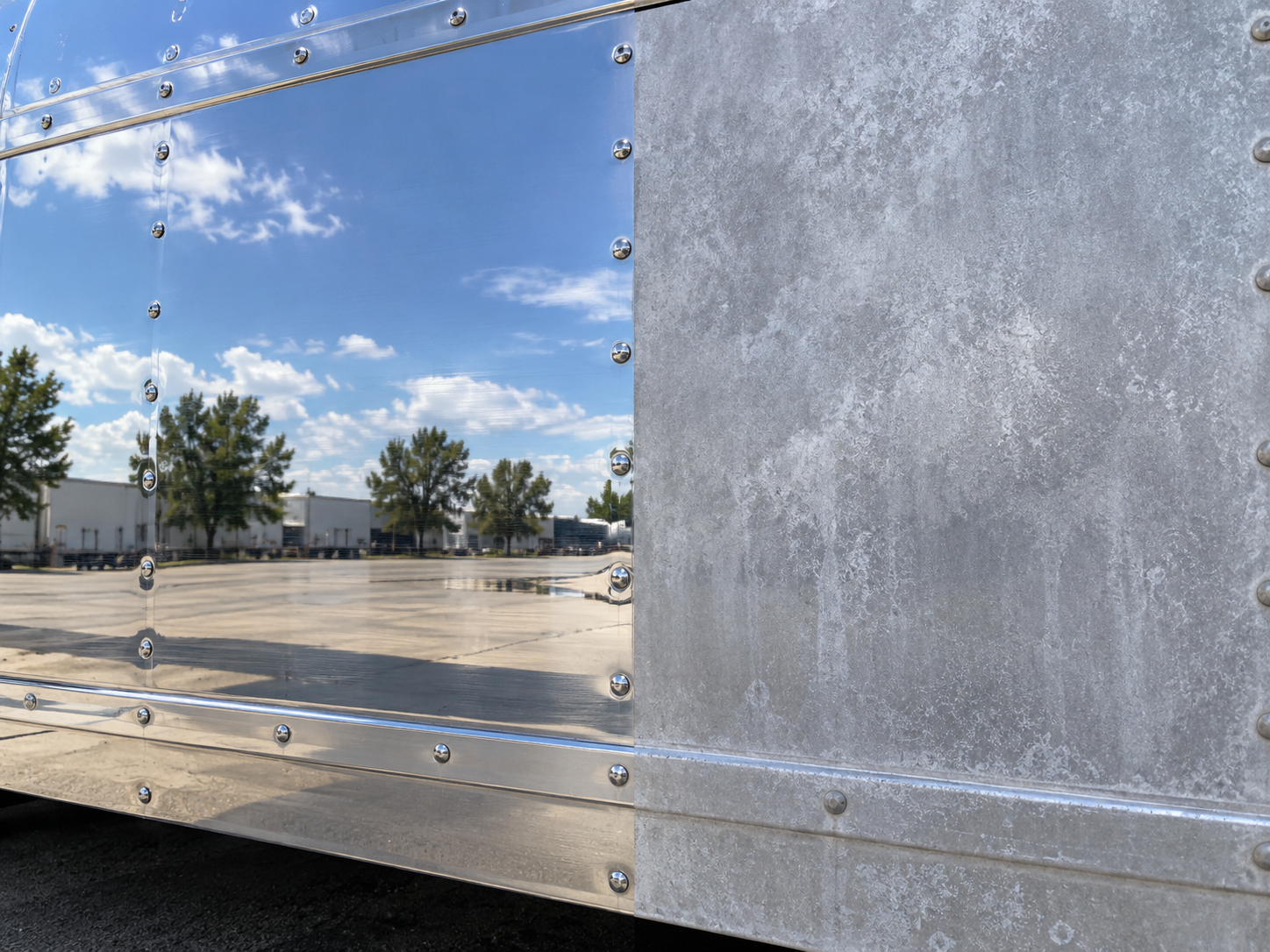
Polished aluminium either reflects you or it does not — there is no halfway, and no way to fake it in a photo. Salt air is what takes it away: the white bloom on a boat rail or a diamond plate step is the metal itself oxidising, not dirt sitting on top of it.
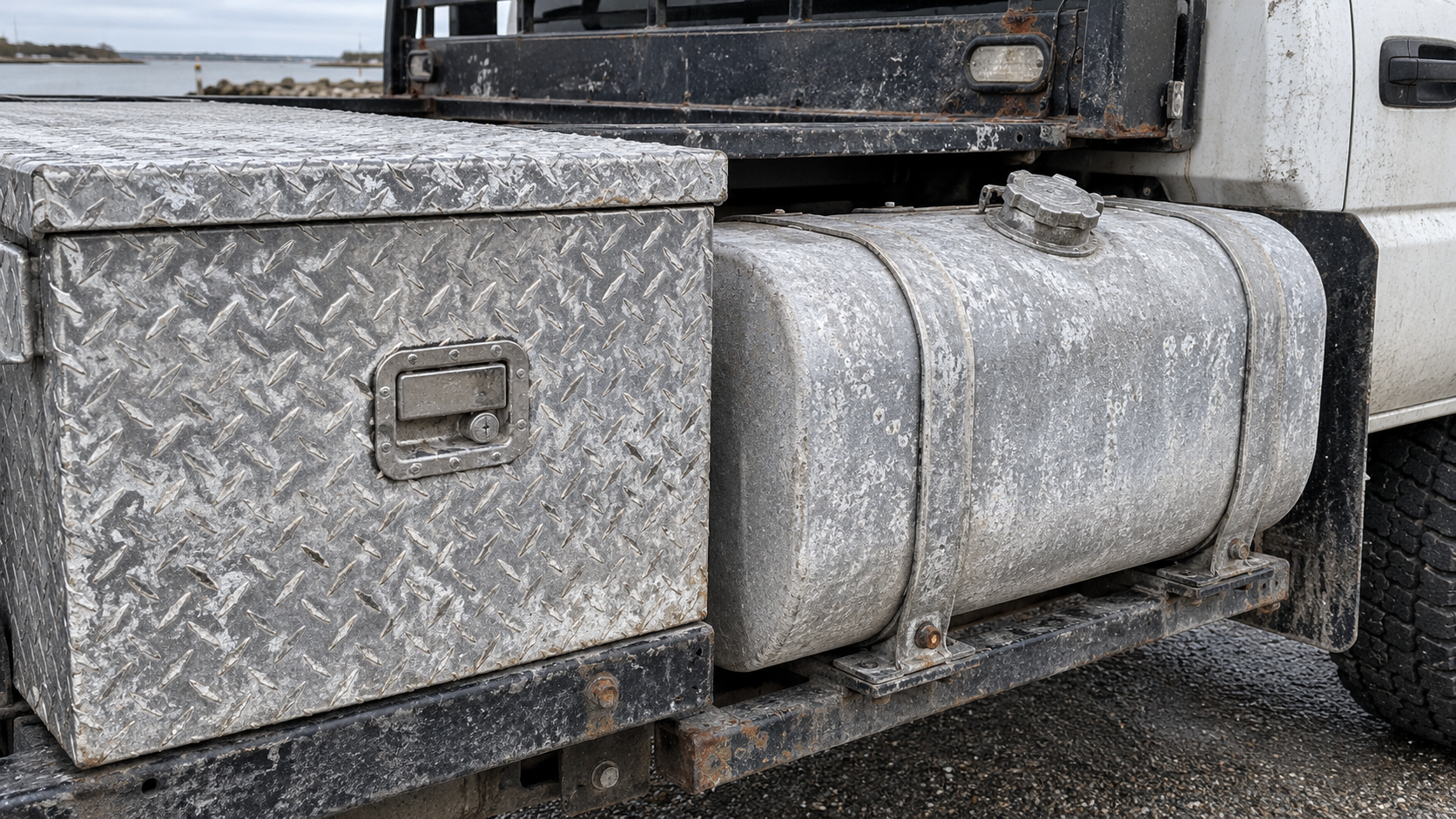
Before — white bloom is the metal oxidising, not dirt
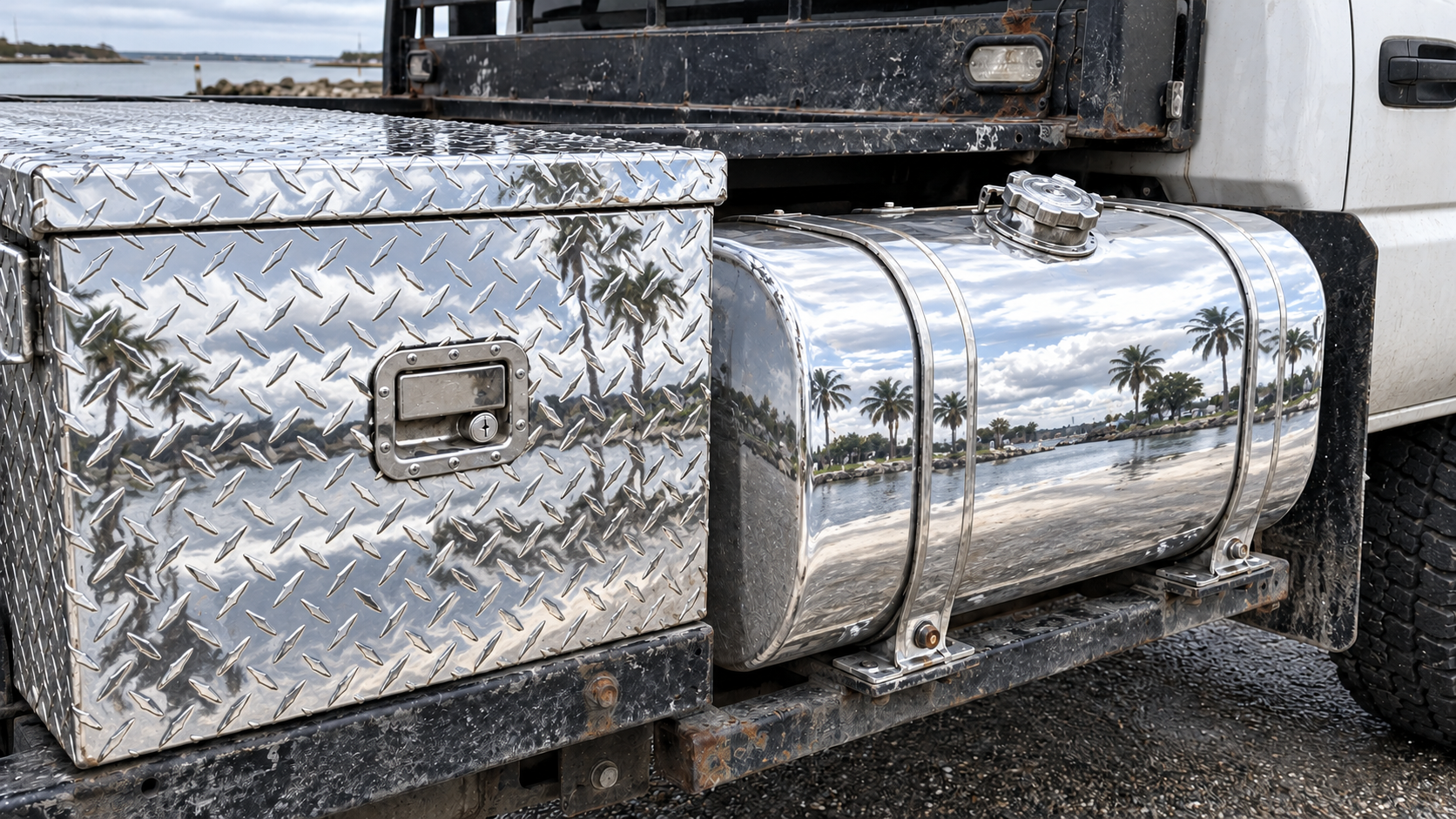
After — if you cannot see the sky in it, it is not done
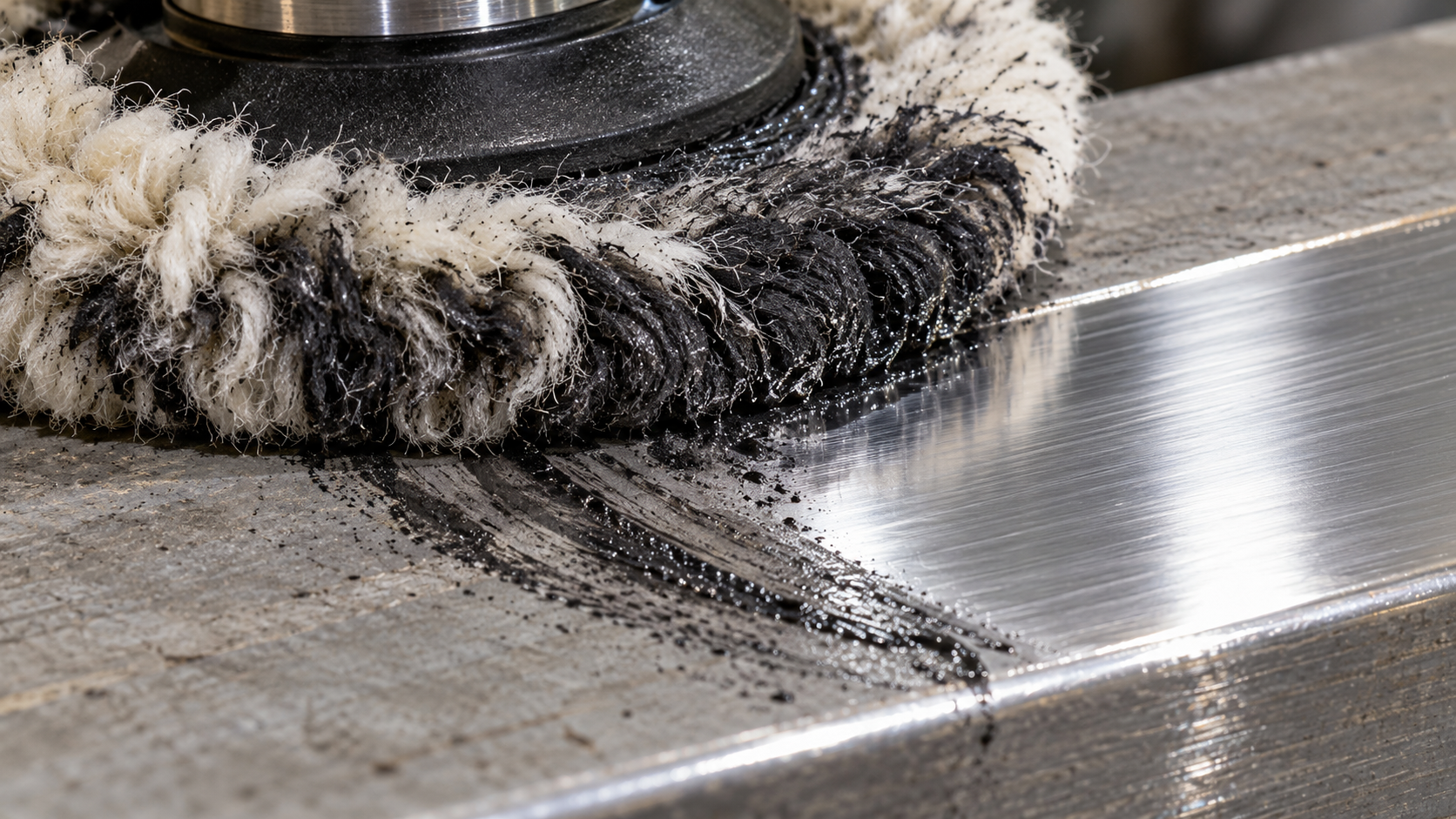
The black on the wool is removed aluminium — the cut is real
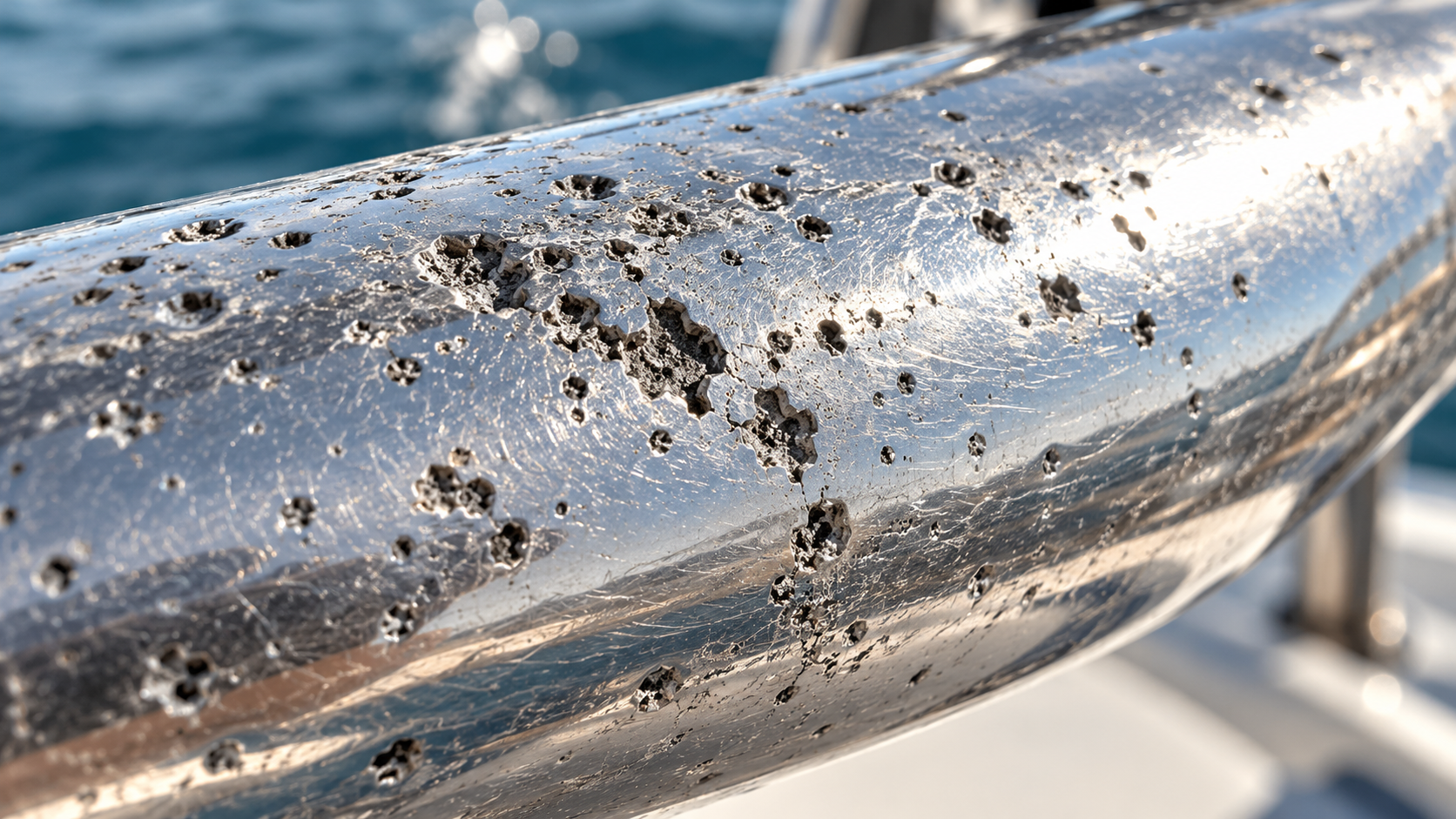
Pitting is metal that is gone — shine will not fill it back in
Different metals, different jobs
What we polish
Chrome
Stainless
Aluminium
Diamond plate
Billet
Polished alloy wheels
Each needs a different compound and a different speed. Aluminium cuts fast and burns easily. Stainless is hard and slow. Chrome is a thin plating over something else, so there is very little margin. Using one approach on all of them is how brightwork gets ruined.
Anodised aluminium is the exception. Polishing removes the anodising — a protective layer you probably want to keep. We will point that out rather than quietly polish it off.
Why island metal goes bad fast
- Salt is hygroscopic — dried salt keeps pulling moisture out of humid air and keeps working days after it landed
- On aluminium, constant salt stops the protective oxide layer ever stabilising, so it chalks and pits far faster than on the mainland
- On chrome, salt finds a chip or pore, gets under the plating and lifts it from beneath — that is the bubbling and flaking people mistake for peeling
- Vog adds acid on top — the USGS calls it primarily sulfuric acid, with the corrosive properties of dilute battery acid
Said before you pay, every time
Two things polishing cannot do
- Pitted chrome. Pitting is missing metal. Polishing gives you shiny pits. This is the single most common disappointment in this trade and the most common condition on this island, so we raise it before quoting rather than after finishing.
- Heat bluing on exhaust. The metal oxidised at temperature and the colour went into the material. Nothing polishes it off. Some shops chemically treat it with limited and inconsistent results; we do not offer it. We can polish the sound sections so the contrast is less obvious.
And then protect it. Polished bare metal starts oxidising again immediately, and salt is at work the first humid night. Polishing without protecting means paying for the same job again in a year or two. Fine if you enjoy the ritual; worth knowing if you do not.
Island Special · Big Island pricing
What it costs
Prices shown are cash prices. Pay by cash or check and that is what you pay. The card price is shown in grey beside every figure — slightly higher, because card processing costs us that. Nothing is added at checkout either way: both prices are on the page before you book.
Hawaii GET is added at invoice and shown as its own line, at the state maximum visible pass-on of 4.712% (4% state + 0.5% Hawaiʻi County surcharge). Prices on this page do not include it.
Cars & motorcycles
Chrome & stainless polishingQuoted on inspection — two bikes of the same model can be a two-hour job and a two-day job
Custom quote
Polished alloy wheels
Custom quote
Horse trailers — per square foot of polished surface
Single-stage polish
$2.50 / sq ft$2.60 / sq ft card
Heavy oxidation polish
$6 / sq ft$6.20 / sq ft card
Included free in every coating package
Stealth Diamond BorographChrome and stainless polishing on bright sound metal, plus coating on wheels and brightwork
from $1,000$1,035 card
Ceramic Infused Super ProtectionThe lighter way to protect polished metal
from $100$104 card
Travel fee $50$52 card past 20 miles outside the Kona district. Gas on this island runs well above the mainland and the run to Waimea, Hawi or Hilo is real time in the truck — that fee goes straight to the technician working your job, not onto the service price. No fee if you drop off at our Kona shop near Magic Sands Beach Park — we give you the exact address when you book. We tell you the travel fee when you book, never when we arrive.
Free in every coating package
13 years on the Big Island
5,000+ vehicles
Fully insured
Trained & certified techs
100% satisfaction guaranteed
In our customers’ words
Five stars, every one
Google Reviews
Shown word for word
I had my truck ceramic coated with Zippy Klean they did a great job. I would definitely recommend Steve and his team. They got me on in short notice and my truck looks awesome! Thanks again Steve
Another great detail from Zippy. Had both my vehicles done. Came a little early and Skyler took care of business. Highly recommend. Try the super infused. Good stuff.
No obligation
Get your brightwork assessed
Close photos in daylight. We are looking for whether the surface is dull or actually pitted — those look similar in a photo and mean very different things.
Prefer to talk? (808) 201-6005 — call or text. Open 7 days · 6am–6pm.
Straight answers
Metal polishing questions
How much does metal polishing cost?
On cars and motorcycles it is quoted on inspection, because the condition range is enormous. On horse trailers it is priced per square foot of polished surface: $2.50 single-stage and $6 for heavy oxidation.
Chrome and stainless polishing is included in every coating package at no extra charge, on bright sound metal.
A flat price for bike or car brightwork would be a guess. Two bikes of the same model can be a two-hour job and a two-day job.
Can you polish pitted chrome?
No. Pitting is missing metal, and polishing makes it shinier and still pitted.
We say this before quoting, every time, because it is the single most common disappointment in this trade. On an island it is also the most common condition — salt gets under the chrome layer and lifts it from beneath, and once that has happened the plating is compromised.
Bright, sound chrome polishes up dramatically and it is one of the most satisfying jobs we do. We will tell you which one you have.
Can you remove heat bluing from exhaust?
No. Heat bluing is a change in the metal itself, not a deposit on it — nothing polishes it off.
The metal oxidised at temperature and the colour went into the material. Some shops chemically treat it with limited and inconsistent results; we do not offer it.
What we can do is polish the sound and unaffected sections to a high standard so the contrast is less obvious.
Why does metal go bad so fast on the Big Island?
Marine salt is hygroscopic — it pulls moisture out of humid air, so dried salt on a metal surface keeps working on it days after it landed.
On aluminium the oxide layer normally forms and stabilises. Constant salt keeps disrupting it, which is why trailers, wheels and bike cases here chalk and pit on a timescale that surprises people from the mainland.
On chrome the attack comes from underneath. Salt finds a chip or a pore, gets under the plating and lifts it, which is what causes the bubbling and flaking that looks like the chrome is peeling.
Vog adds acid on top — the USGS describes it as primarily sulfuric acid, with droplets carrying the corrosive properties of dilute battery acid.
What metals do you work on?
Chrome, stainless, aluminium, diamond plate, billet and polished alloy wheels.
Different metals need different compounds and different speeds. Aluminium cuts fast and burns easily; stainless is hard and slow; chrome is a plating over something else and the plating is thin.
Anodised aluminium is the exception — polishing removes the anodising, which is a protective layer you probably want to keep. We will point that out rather than polish it off.
Should I coat metal after polishing it?
On this island, yes — polished bare metal starts oxidising again immediately, and salt gets to work the first humid night.
Stealth Diamond Borograph goes on wheels and brightwork as part of the Diamond Complete package and is permanent. Ceramic Infused Super Protection at $100 is the lighter option.
Polishing without protecting means paying for the same job again in a year or two. That is fine if you enjoy the ritual; it is worth knowing if you do not.
Island Special · Big Island pricing
Book your spot
(808) 201-6005Kailua-Kona to Hilo. We come to you, or drop it at our Kona shop near Magic Sands.