
Skyler with Zippy Klean did a very professional and fantastic job cleaning up my recently purchased 2023 Jeep Compass. Being a part time resident having the mobile service was critical for me!! I highly recommend Zippy Klean and Skyler for your automotive detail needs!! 👍🏻👍🏻
Home › Liquid PPF Installation
Paint protection with no seams to lift
Liquid PPF flows into every curve and body line, then cures as a solid film bonded to your clear coat. No cut lines. No edges for salt to sit in. No adhesive to yellow under the strongest UV in the country. Finished with Stealth Diamond Borograph on top — which makes the warranty a lifetime one.
Permanent — 15+ years
Lifetime warranty with Borograph
No seams, no lifting edges
Kona shop or mobile
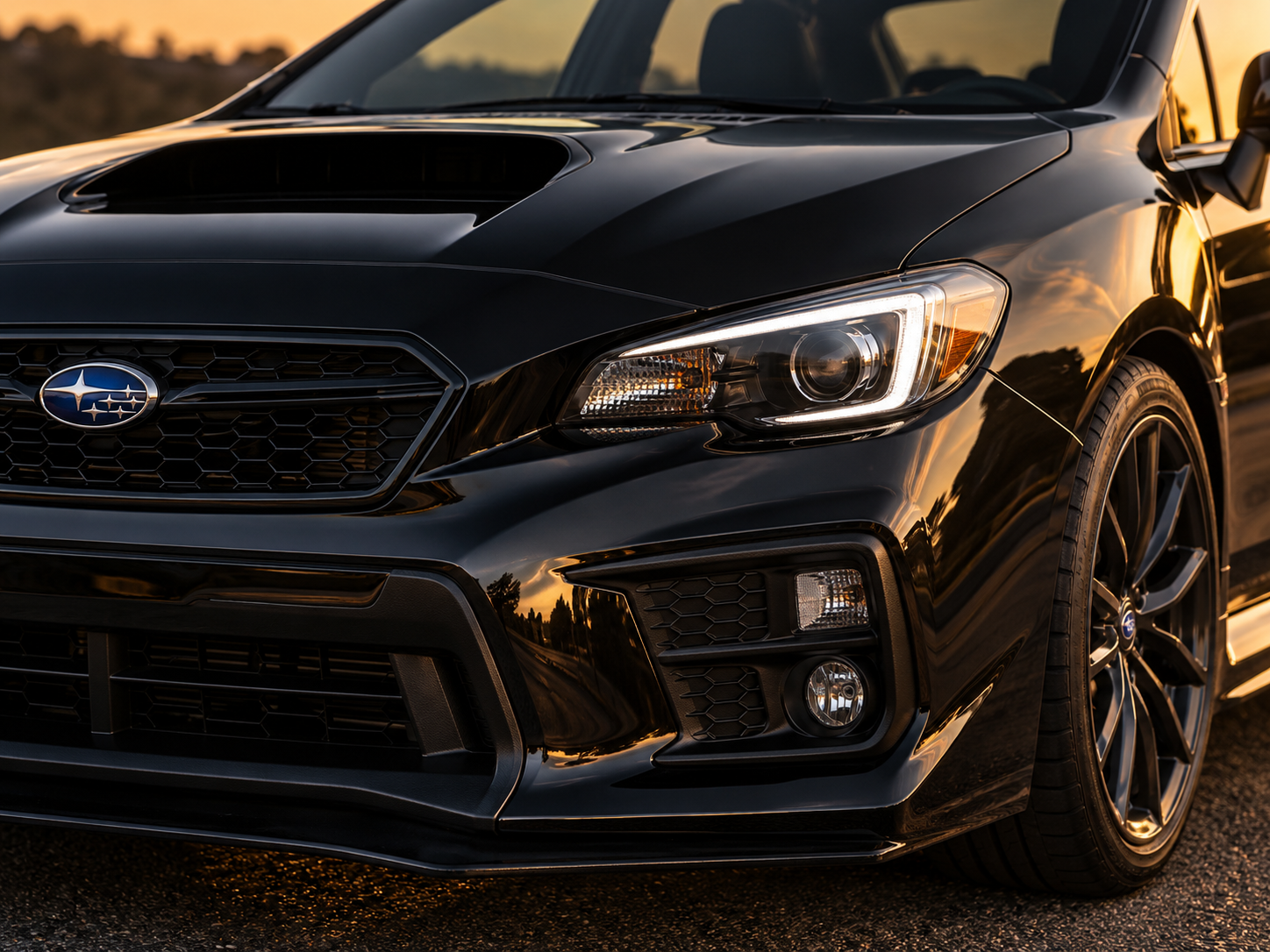
Sheet film vs liquid
Where traditional clear bra fails here
Nothing against sheet film — it is a good product solving the same problem a different way. But three of its weak points are exactly what this island attacks.
- The adhesive layer. Sheet film is held on by adhesive. UV degrades adhesive, and Hawaiʻi runs the highest sustained UV load of any U.S. state. Liquid PPF has no adhesive — it bonds chemically to the clear coat itself.
- The edges. Every cut line is a place where salt and vog collect and sit. Liquid PPF has no cut lines, because it is applied as a liquid.
- The plasticisers. They are what makes urethane film flexible, and they are what turns it amber after enough UV. Liquid PPF contains none.
- Coverage. Full-vehicle sheet film means a lot of cutting and a lot of cost, so most installs stop at the front clip. Liquid PPF covers every painted panel as standard, which means every panel gets the same barrier against vog and salt.
- The honest trade-off. Sheet film comes off. Liquid PPF is permanent. If you intend to change the vehicle’s appearance later, that is a real consideration and we would rather raise it now.
Visual proof
What failure looks like, and what it should look like
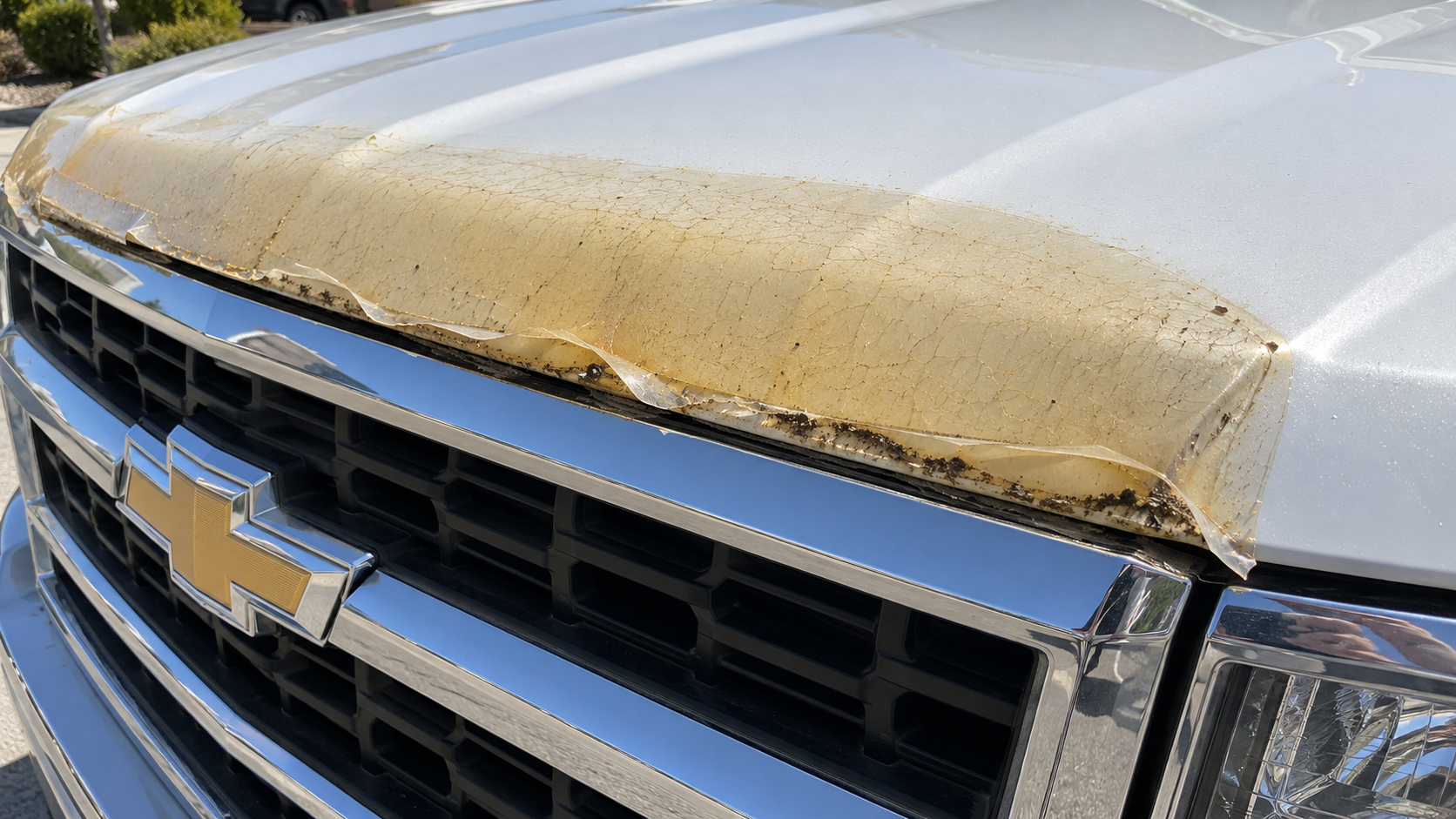
Sheet film — yellowed, lifting, dirt in the edge
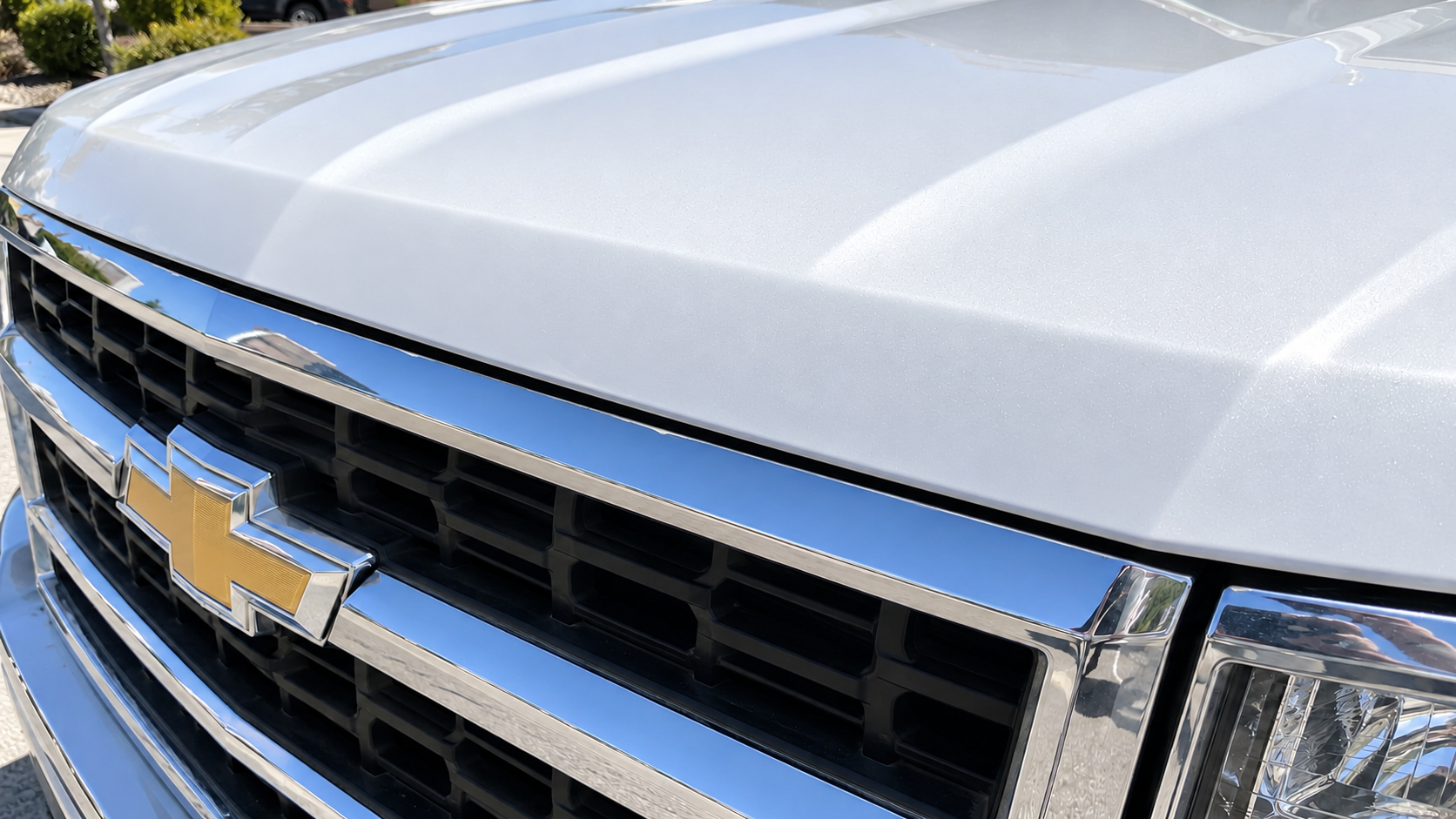
Liquid PPF — no edge to lift, no tint to yellow
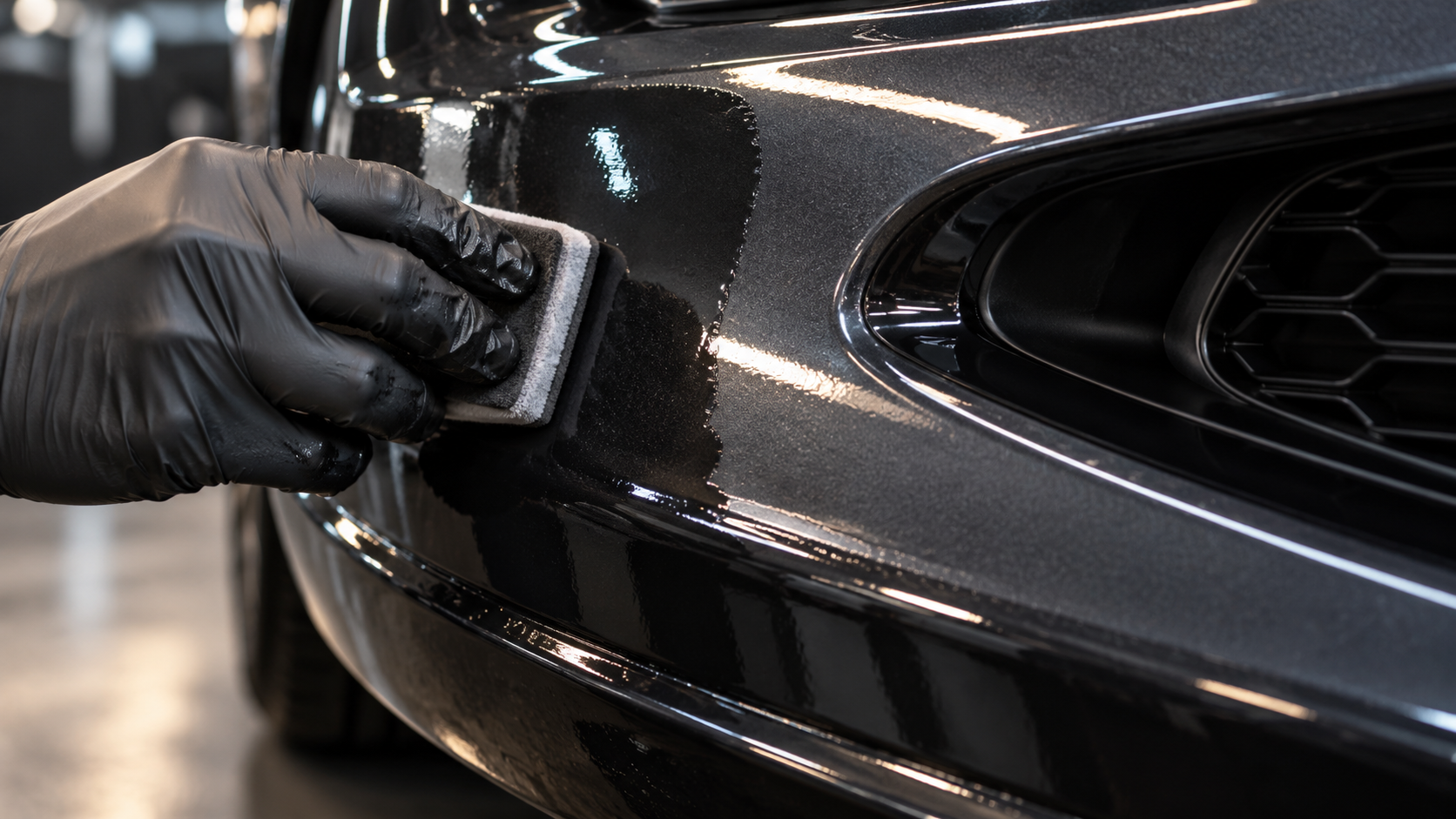
Flows into curves sheet film cannot wrap
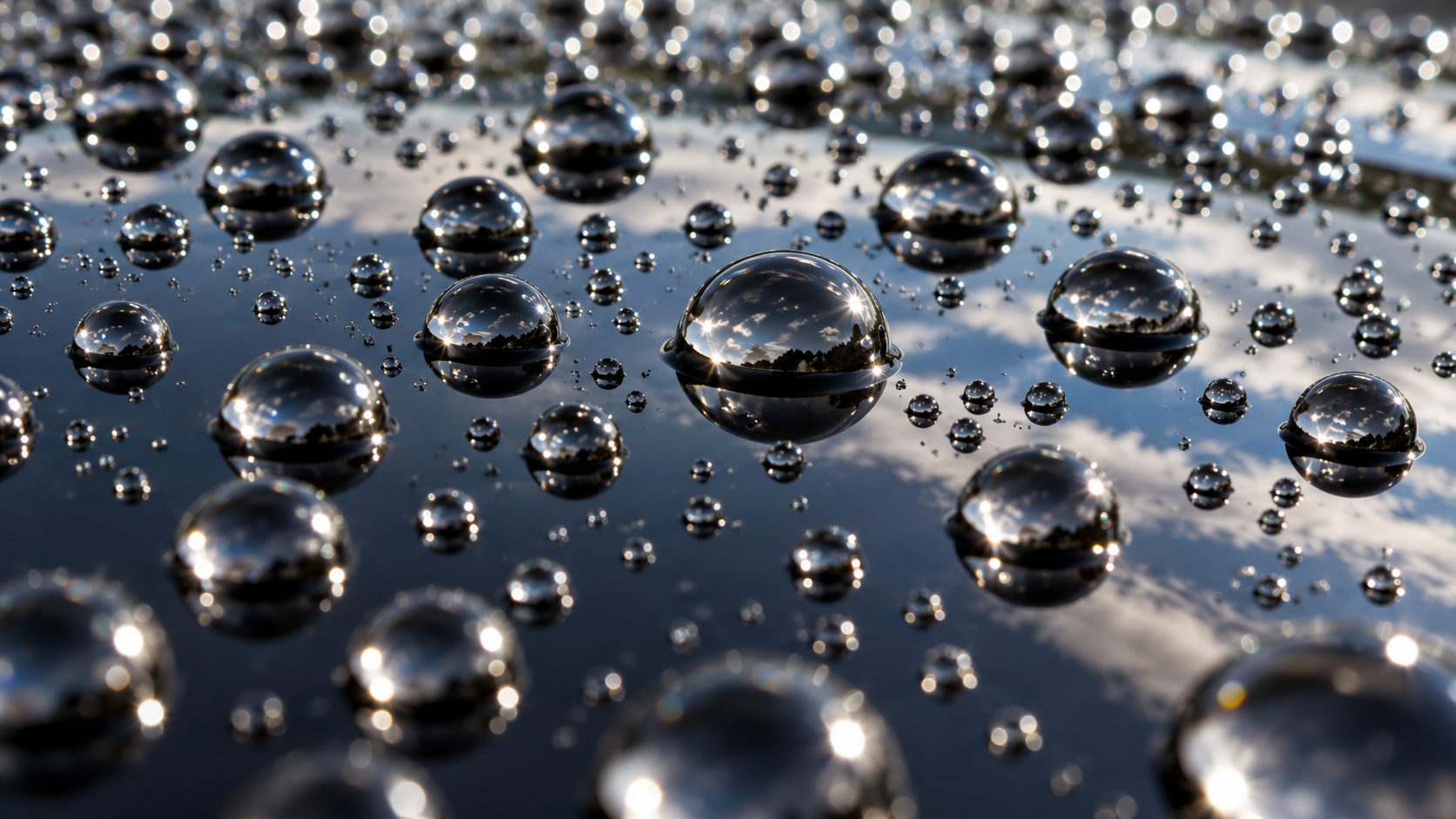
Borograph on top — gloss and water behaviour
Island Special · Big Island pricing
What Liquid PPF costs
Prices shown are cash prices. Pay by cash or check and that is what you pay. The card price is shown in grey beside every figure — slightly higher, because card processing costs us that. Nothing is added at checkout either way: both prices are on the page before you book.
Hawaii GET is added at invoice and shown as its own line, at the state maximum visible pass-on of 4.712% (4% state + 0.5% Hawaiʻi County surcharge). Prices on this page do not include it.
Every price below includes the Stealth Diamond Borograph layer on top, which is what turns the ten-year film warranty into a lifetime one.
Liquid PPF + Stealth Diamond Borograph
Small — sedans & coupes
$3,000$3,105 cardRegular $5,500
Medium — crossovers, pickups, small SUVs
$4,000$4,140 cardRegular $7,350
Large — full-size trucks, vans, large SUVs
$5,000$5,175 cardRegular $9,150
Tour & commercial vansQuoted on inspection
from $7,500$7,765 card
Everything else
$1,800$1,865 card
BoatsPer foot of overall length
$130 / ft$134.55 / ft card
Horse trailersPer foot of trailer length
$200 / ft$207 / ft card
Aircraft — fuselageHelicopters are fuselage only
$200 / ft$207 / ft card
Aircraft — wingspan
$100 / ft$103.50 / ft card
Travel fee $50$52 card past 20 miles outside the Kona district. Gas on this island runs well above the mainland and the run to Waimea, Hawi or Hilo is real time in the truck — that fee goes straight to the technician working your job, not onto the service price. No fee if you drop off at our Kona shop near Magic Sands Beach Park — we give you the exact address when you book. We tell you the travel fee when you book, never when we arrive.
Permanent — 15+ years
Lifetime warranty with Borograph
13 years on the Big Island
5,000+ vehicles
Fully insured
Trained & certified techs
100% satisfaction guaranteed
In our customers’ words
Five stars, every one
Google Reviews
Shown word for word
I had my truck ceramic coated with Zippy Klean they did a great job. I would definitely recommend Steve and his team. They got me on in short notice and my truck looks awesome! Thanks again Steve
Another great detail from Zippy. Had both my vehicles done. Came a little early and Skyler took care of business. Highly recommend. Try the super infused. Good stuff.
No obligation
Get your Liquid PPF quote
Send photos of the front clip and any existing chips. We will come back with a firm number and tell you honestly which chips need paint before the film goes on.
Prefer to talk? (808) 201-6005 — call or text. Open 7 days · 6am–6pm.
Straight answers
Liquid PPF questions
How long does Liquid PPF last in Hawaii sun?
Liquid PPF is a permanent application rated at 15+ years, and because we finish every install with a layer of Stealth Diamond Borograph on top, the NanoPro warranty becomes a lifetime one rather than the ten years the film carries on its own.
UV is exactly where conventional film fails, and Hawaiʻi has the worst of it in the country — a UV index around 7 in winter and 11+ in summer, the highest sustained load of any U.S. state. Traditional 6–8 mil paint protection film absorbs that until it yellows, hazes and begins lifting at the edges, usually somewhere between year five and year eight. On this island it tends to be the early end of that range.
Liquid PPF cures as a solid film chemically bonded to the clear coat rather than an adhesive-backed sheet laid on top, so there is no adhesive layer to fail and no edge to lift. That also means no seam for salt and vog to collect in, which is the quiet reason sheet film struggles here.
Is Liquid PPF better than traditional clear bra film?
Liquid PPF has higher tensile strength than traditional film and installs with no cut lines, no seams and no lifting edges, because it is applied as a liquid that flows into every curve and body line before it cures.
Traditional film is cut from a sheet, which means it has to stop somewhere. Those stopping points — around mirrors, along the hood edge, at the A-pillar — are visible, they collect dirt, and they are where failure starts. On an island they also collect salt, which sits in the seam and works on the adhesive from underneath.
Liquid PPF has none of them, so it can cover panels that sheet film realistically cannot: complex bumpers, deep body lines, mirror caps and vents. The honest trade-off: sheet film can be removed and replaced. Liquid PPF is permanent. If you plan to change the vehicle’s appearance later, that matters.
Does Liquid PPF yellow or pit like clear bra?
No. Liquid PPF does not yellow or pit, because it contains no adhesive layer and no plasticisers — the two components in conventional film that break down under UV and cause yellowing.
Pitting on traditional film comes from road debris striking the surface and leaving permanent craters in a relatively soft urethane. Liquid PPF cures considerably harder, so light impacts that would mark sheet film do not leave the same deformation.
Yellowing is the one people notice. A clear bra that has gone amber across the hood of an otherwise clean car is a Hawaiʻi classic, and it is UV doing exactly what UV does to plasticised urethane.
How much does Liquid PPF cost on the Big Island?
Liquid PPF with Stealth Diamond Borograph on top is $3,000 for a sedan or coupe, $4,000 for a crossover, pickup or small SUV, and $5,000 for a full-size truck, van or large SUV.
Those are starting prices for a vehicle in average condition. Paint condition is the one variable we cannot assess from a phone call, so every quote is confirmed after inspection. Heavy vog etching, severe water-spot etching and failed clear coat are quoted on top.
Motorcycles are $1,800. Boats are $130 per foot. Horse trailers are $200.00 per foot. Aircraft are $200.00 per foot of fuselage plus $100.00 per foot of wingspan.
Can Liquid PPF be applied to a car that already has rock chips?
Existing chips have to be addressed before the film goes on, because Liquid PPF is permanent — whatever is in the paint when we apply it stays there under a layer that does not come off.
Light chips can often be filled and levelled as part of correction. Chips that have gone through to primer or bare metal need paint, and on this island that is urgent rather than cosmetic: exposed metal plus marine salt plus humidity is a corrosion cell that will not wait for you.
We inspect and tell you which category each chip falls into, with the number attached, before any work starts.
Does Liquid PPF cover the whole car or just the front?
Full vehicle. Liquid PPF goes on every painted exterior panel, not just the impact zones — there is no seam or edge to worry about, so there is no reason to stop at the A-pillar.
This is a real difference from sheet film, where full coverage means a lot of cutting, a lot of edges and a lot of cost. Because this flows on, the whole vehicle is the normal install.
That matters on the Big Island for a reason that has nothing to do with rocks: full coverage means every panel gets the same barrier against vog and salt, including the ones sheet film never reaches.
What is the difference between Liquid PPF and Borograph?
Liquid PPF is impact protection; Borograph is chemical and UV protection. They do different jobs, which is why we install them together rather than asking you to pick.
Film underneath carries the rock chip and debris resistance. Borograph on top carries the gloss, the hydrophobics and the chemical resistance to vog, salt and bird droppings. Neither one does the other’s job.
If you only want one, Borograph is the one most Big Island vehicles need, because the daily attack here is chemical rather than mechanical. Liquid PPF earns its place if you drive Saddle Road, Queen K at speed, or a lot of cinder and lava-rock shoulder.
Island Special · Big Island pricing
We take one coating a day
(808) 201-6005Kailua-Kona to Hilo. We come to you, or drop it at our Kona shop near Magic Sands. Book your spot.