
I had my truck ceramic coated with Zippy Klean they did a great job. I would definitely recommend Steve and his team. They got me on in short notice and my truck looks awesome! Thanks again Steve
Home › Heavy Gelcoat Oxidation Compounding
That chalk on your hand is your hull
Oxidation is dead resin. UV breaks down the binder until the pigment goes loose and powdery, and the only fix is cutting the dead layer away to reach sound gelcoat underneath. Multi-stage compounding, priced by the foot.
$65.00 / ft
Free test section before we quote
Harbour, yard or Kona shop
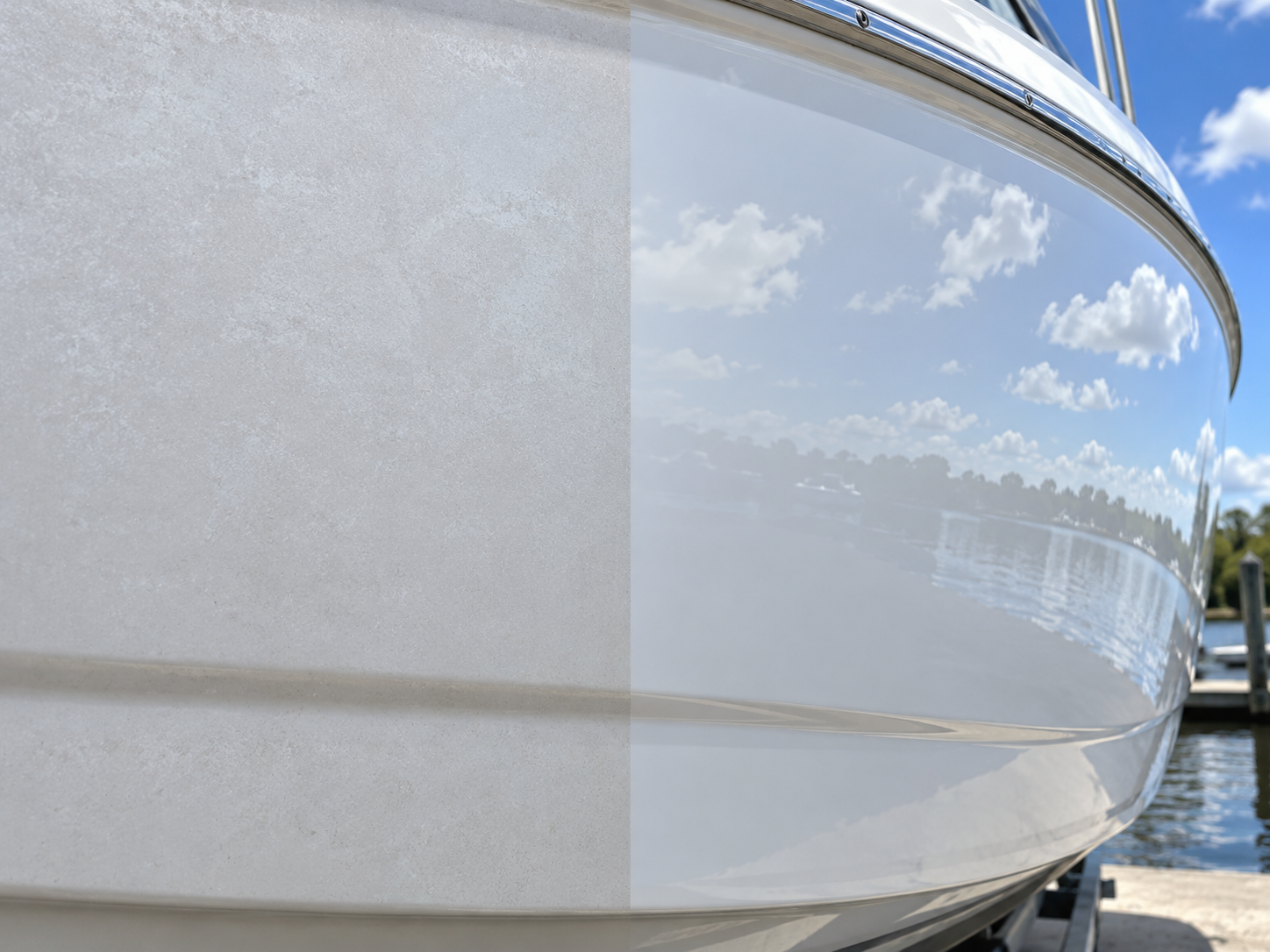
Visual proof
Heavy oxidation is a cutting job
When gelcoat has gone past dull into powder, no wax, sealant or one-step polish will touch it. The chalk has to be cut off, and there is a finite amount of gelcoat to cut — which is exactly why we look before we quote.
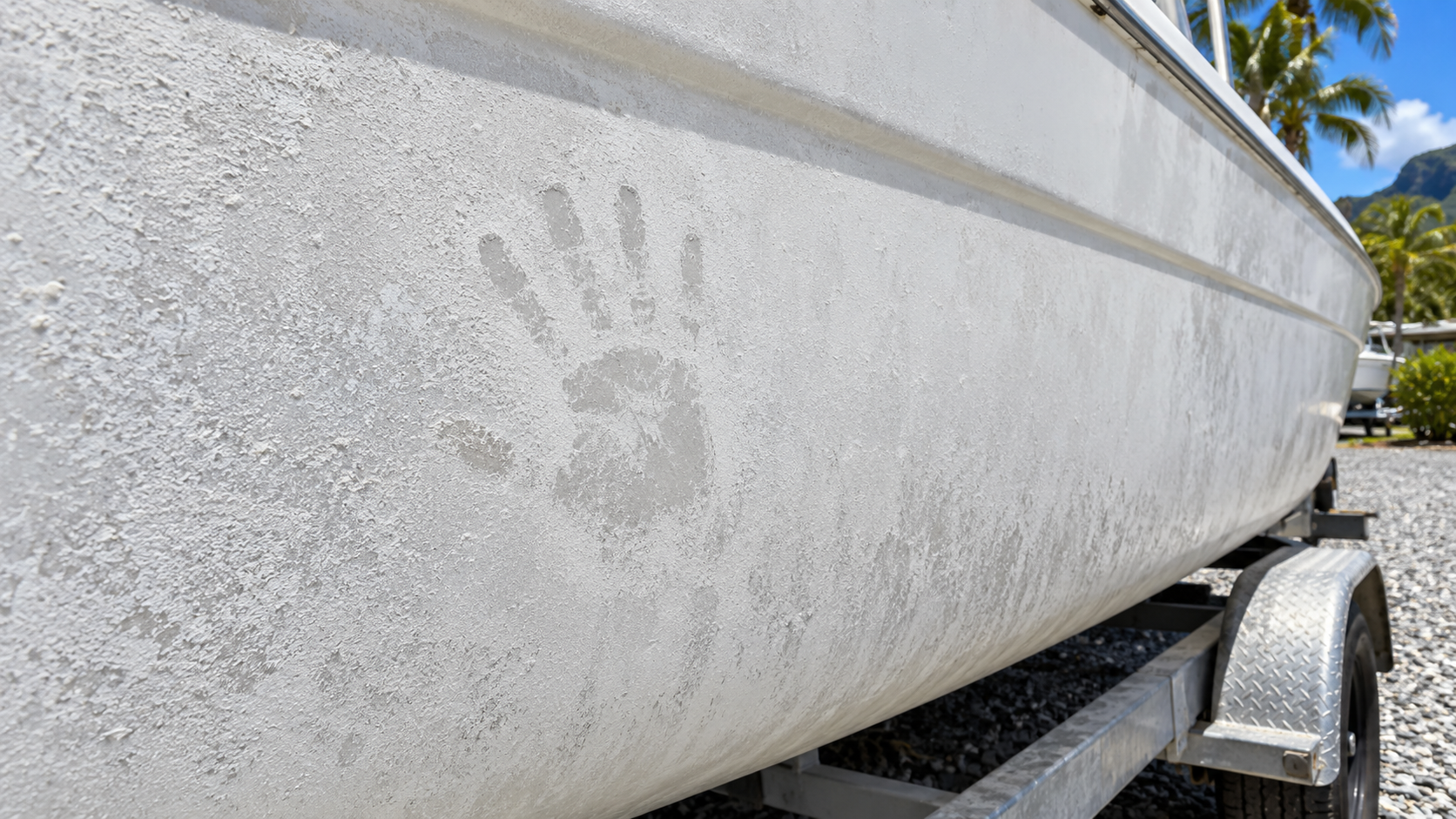
Before — you can wipe this off with your hand
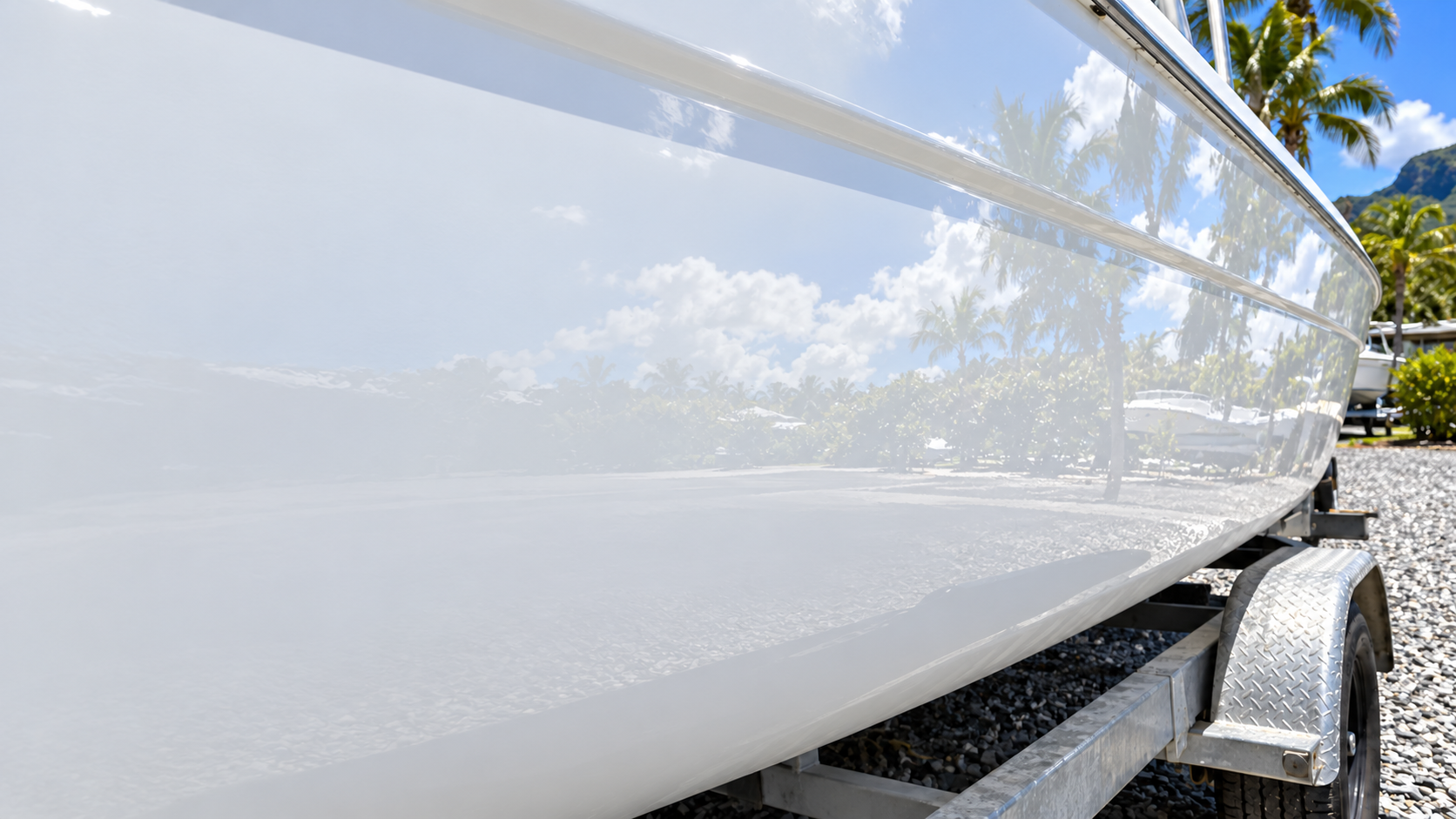
After — cut back to live gelcoat, then sealed
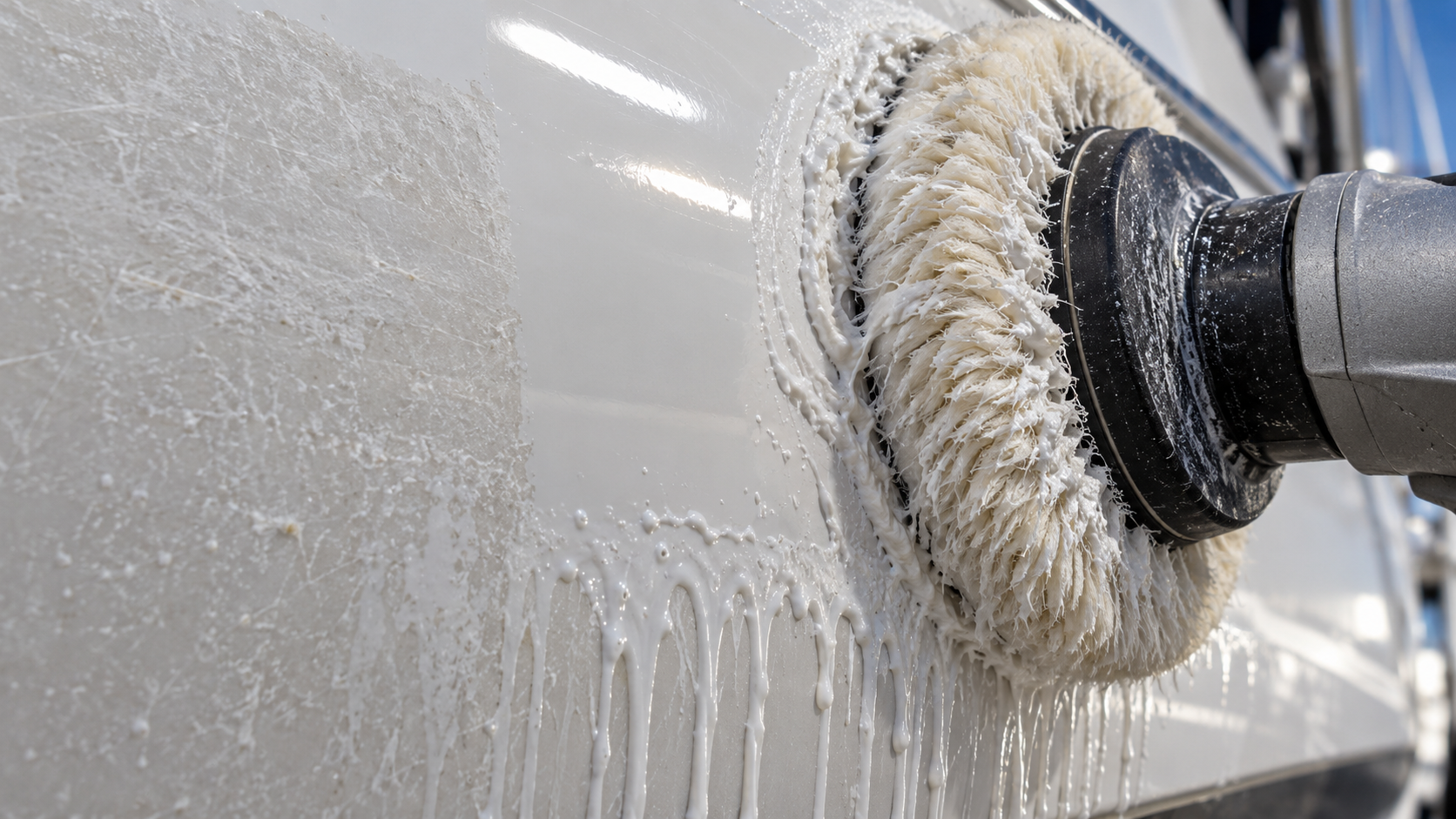
Wet, slow and messy — that is what heavy cutting is
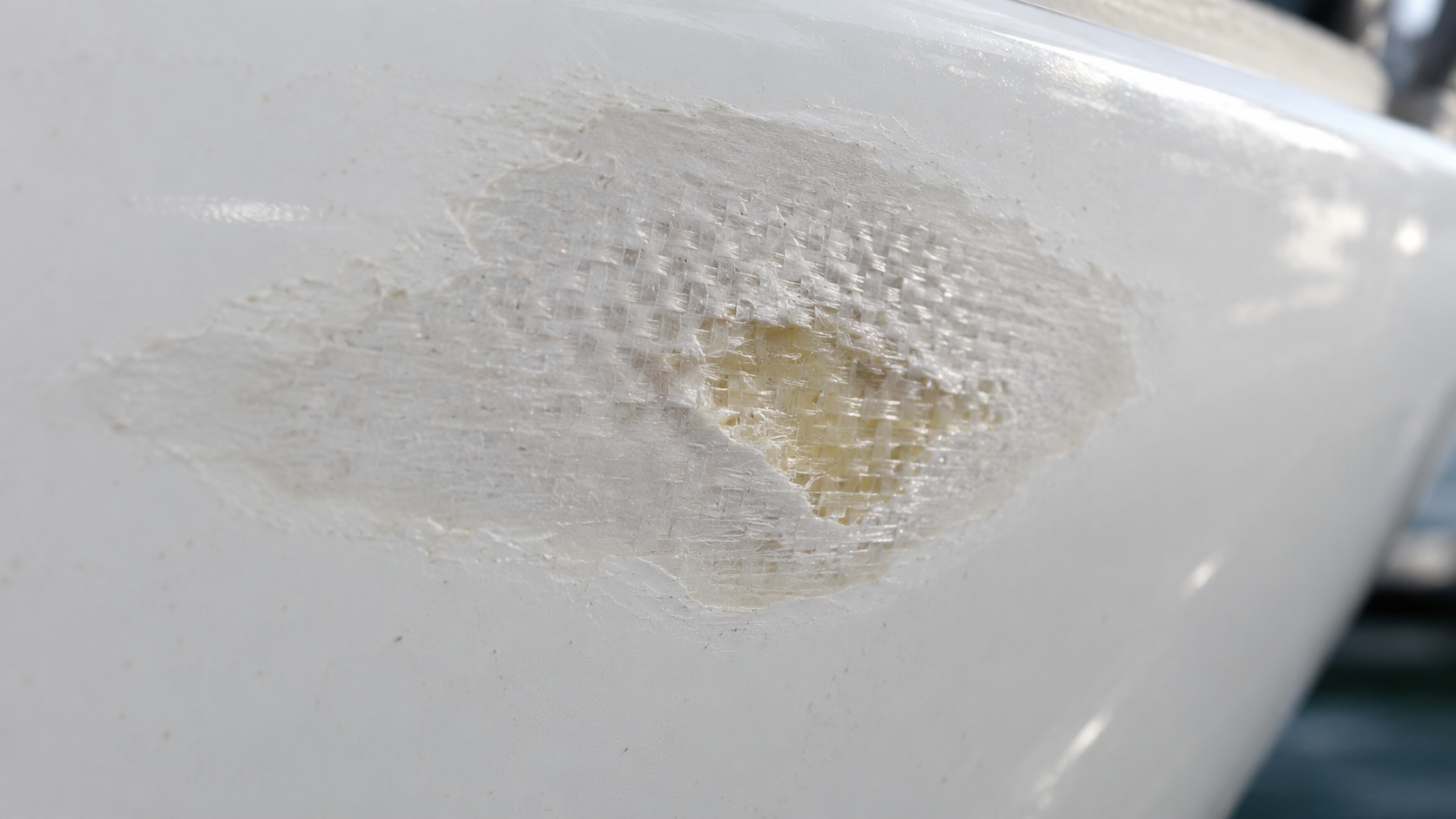
There is a bottom to gelcoat — we stop before we find it
What is actually happening
Oxidation is a layer, not a stain
This matters because it tells you which products are honest and which are not.
- UV breaks down the resin that binds pigment at the gelcoat surface. The pigment is still there; what held it together is gone.
- That is the chalk. It comes off on your hand because it is no longer attached to anything.
- Nothing restores it chemically. A wax or sealant on chalked gelcoat glues the powder down for a few weeks and then it is back. Anything sold as "restoring" oxidised gelcoat is doing exactly that.
- Compounding removes the dead layer to reach sound gelcoat underneath. That is the only real fix, and it is mechanical.
- Hawaiʻi gets there faster. A UV index of 11+ in summer — the highest sustained load of any U.S. state — chalks a hull in five years that would take fifteen on the mainland.
Before you book the expensive one
Do you actually need heavy compounding?
Heavy is more than twice the price of single-stage. Plenty of hulls that look bad only need one pass, and we would rather tell you that than take the bigger job.
The hand test
- Wipe a dry palm across the hull
- Comes away visibly chalky, colour underneath dull and flat — heavy, multi-stage
- Comes away clean but the finish lacks reflection — single-stage will usually do it
We do a free test section before quoting the whole hull. A small area compounded and polished so you can see what is genuinely recoverable rather than take our word for it. Quoting heavy compounding sight-unseen on a hull that needed one pass is how people get overcharged, and we are not going to do that.
The other limit is thickness. Gelcoat is finite. A hull compounded repeatedly over decades may not have enough left to cut again safely, and cutting through into the laminate is a structural problem rather than a cosmetic one. If that is where yours is, the honest answer is paint, and we will say so.
Island Special · Big Island pricing
What it costs
Prices shown are cash prices. Pay by cash or check and that is what you pay. The card price is shown in grey beside every figure — slightly higher, because card processing costs us that. Nothing is added at checkout either way: both prices are on the page before you book.
Hawaii GET is added at invoice and shown as its own line, at the state maximum visible pass-on of 4.712% (4% state + 0.5% Hawaiʻi County surcharge). Prices on this page do not include it.
Boats — per foot of overall length
Heavy oxidation compoundingMulti-stage: compound, refine, polish
$65 / ft$67.30 / ft card
Single-stage oxidation removalOne pass — for lighter oxidation
$25 / ft$25.90 / ft card
Horse trailers — per foot of length
Heavy oxidation buff
$30 / ft$31.05 / ft card
Light oxidation buff
$15 / ft$15.55 / ft card
Protect it afterwards
Stealth Diamond Borograph CeramicPermanent — takes the UV instead of the gelcoat
$65 / ft$67.30 / ft card
Ceramic Infused Super ProtectionSix to twelve months on this island
$12 / ft$12.45 / ft card
Freshly compounded gelcoat is the most receptive surface it will ever be. Leave it bare and it starts oxidising again immediately — and each time you compound, there is less gelcoat left to work with.
Worked examples
24 ft hull — heavy compounding
$1,560$1,615 card
32 ft hull — heavy compounding
$2,080$2,154 card
32 ft hull — compounded, then coated
$4,160$4,160 card
Travel fee $50$52 card past 20 miles outside the Kona district. Gas on this island runs well above the mainland and the run to Waimea, Hawi or Hilo is real time in the truck — that fee goes straight to the technician working your job, not onto the service price. No fee if you drop off at our Kona shop near Magic Sands Beach Park — we give you the exact address when you book. We tell you the travel fee when you book, never when we arrive.
Free test section first
13 years on the Big Island
5,000+ vehicles
Fully insured
Trained & certified techs
100% satisfaction guaranteed
In our customers’ words
Five stars, every one
Google Reviews
Shown word for word
The guys at Zippy Klean did a great job buffing the scratched up dull paint job on my old Prius and making it shine like new. Appreciate, the really professional, friendly and speedy service, which included dropping me by a coffee shop while I waited. Couldn't be happier with Steven's team. Thanks!
I had 3 pickup trucks and 3 SUV’s done by Kelson. He did a great job and all the vehicles look like new. Thank you
No obligation
Get your hull assessed
Send photos of the hull in daylight and tell us the overall length. If it is close to the line between heavy and single-stage, we will do a test section before quoting.
Prefer to talk? (808) 201-6005 — call or text. Open 7 days · 6am–6pm.
Straight answers
Gelcoat oxidation questions
How much does heavy gelcoat oxidation removal cost?
Heavy multi-stage compounding is $65.00 per foot of overall length. A 32-foot hull works out to $2,080.
If the oxidation is light enough for one stage, that is single-stage polishing at $25.00 per foot — a lot less money. We check before quoting and we will not sell you the heavy job if the light one will do it.
Horse trailers and other gelcoat surfaces are priced per foot of their own length: $30.00 per foot for heavy oxidation.
What actually is oxidation on gelcoat?
Dead resin. UV breaks down the resin binding the surface until the pigment is loose and powdery — that chalk that comes off on your hand is your hull, in powder form.
Compounding removes that dead layer to reach sound gelcoat underneath. There is no product that restores it chemically, whatever the bottle says. A wax or a sealant on chalked gelcoat just glues the powder down temporarily and it comes back.
Hawaiʻi gets there faster than almost anywhere because of the UV. A UV index of 11+ in summer, the highest sustained load of any U.S. state, is what chalks a hull in five years that would take fifteen somewhere else.
How do I know if I need heavy or single-stage?
The hand test: wipe a dry palm across the hull. If it comes away visibly chalky and the colour underneath is dull and flat, that is heavy. If it comes away clean but the finish lacks reflection, single-stage will usually do it.
We do a test section before quoting the whole hull — a small area compounded and polished so you can see what is actually recoverable rather than take our word for it.
That test is free and it is the honest way to price this job. Quoting heavy compounding sight-unseen on a hull that needed one pass is how people get overcharged.
Can gelcoat be compounded too many times?
Yes. Gelcoat is a finite layer, and a hull that has been compounded repeatedly over decades may not have enough left to cut again safely.
When that is the case the honest answer is paint, not polish, and we will tell you. Cutting through gelcoat into the laminate is not a cosmetic problem, it is a structural one.
We check thickness and look at the history before quoting a heavy job on an older hull.
Should I coat it afterwards?
Yes, and this is the moment to do it — freshly compounded gelcoat is the cleanest, most receptive surface it will ever be, and leaving it bare means it starts oxidising again immediately.
Stealth Diamond Borograph at $65.00 per foot is permanent and takes the UV instead of the gelcoat. That is the whole point: you are paying to remove dead resin once, then protecting what is left.
If you compound and do not protect, you will be paying to compound again in a few years, and each time there is less gelcoat to work with.
How long does it take?
A day or more for most hulls, depending on length and how far gone the gelcoat is. Multi-stage means multiple passes over every square foot.
Compounding, then refining, then polishing — each is a full pass. That is what separates it from a single-stage job and it is where the price comes from.
Island Special · Big Island pricing
Book your spot
(808) 201-6005Honokohau, Kawaihae, Hilo and every yard in between.